
Compliance Guide
What DOT, VIN, DMV, and EPA Compliance Means for Restroom Trailers
A buyer’s guide to why registration, road legality, and waste compliance matter
before you sign a purchase order.
By GIGONE Engineering & Compliance Team · June 4, 2026 · 8 min read
Quick answer: For a restroom trailer, DOT compliance covers road and tow safety (lighting, braking, safety chains, breakaway systems); a VIN is the unique identity number that proves the unit is a legitimate, registrable vehicle; DMV registration makes it legal to title, plate, and tow on public roads; and EPA compliance governs how its wastewater and waste are contained and discharged. A trailer that fails any one of these can be impossible to register, illegal to tow, uninsurable, or an environmental liability which is why compliance, not price, should be the first thing a buyer verifies.
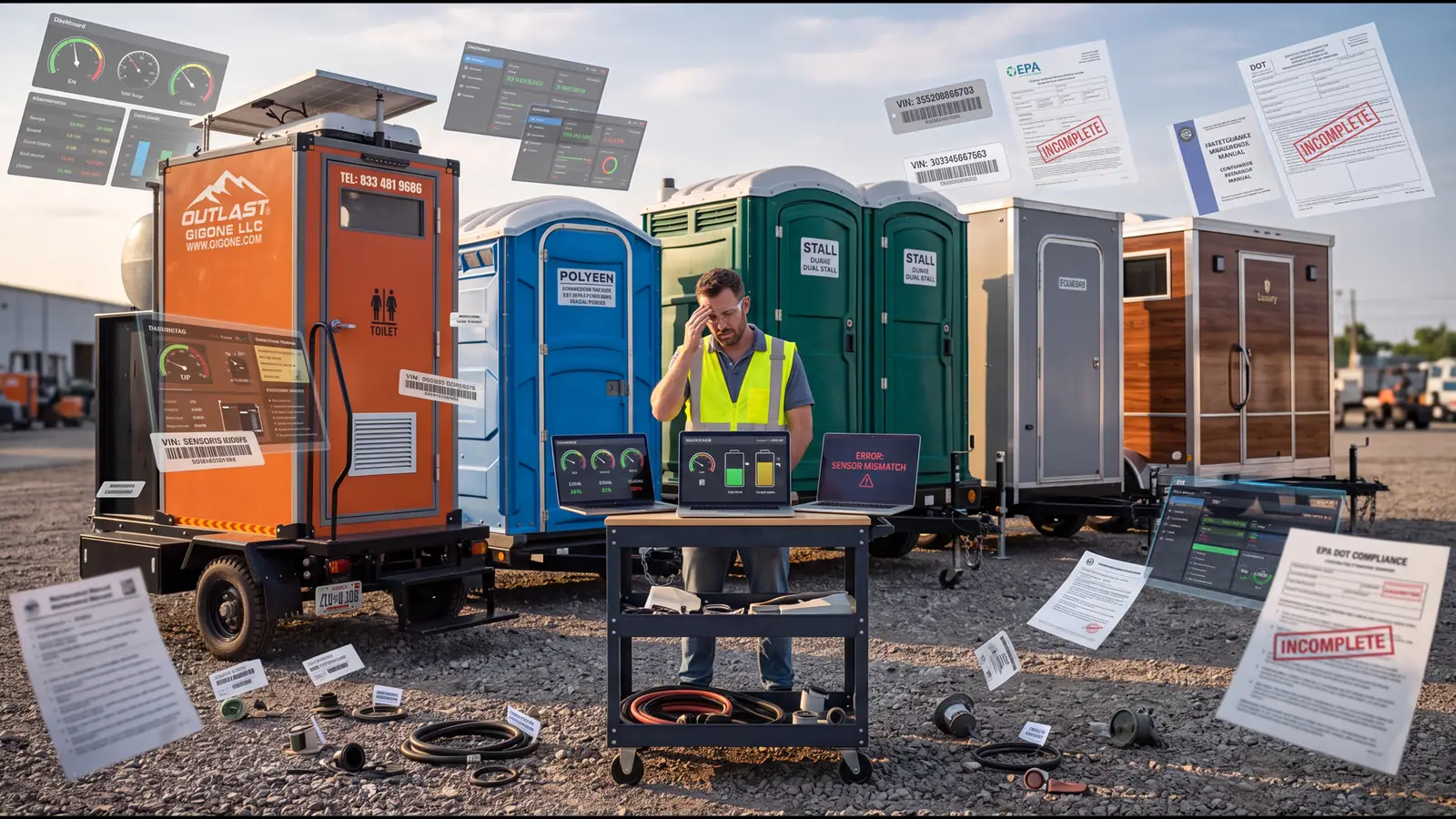
Compliance is the single most overlooked factor when buying a restroom trailer. Buyers compare interior finishes, tank sizes, and price per unit, then discover after delivery that the trailer has no VIN, can’t be registered with the DMV, or uses a waste system that violates local discharge rules. At that point the “bargain” becomes a parked asset that can’t legally reach a jobsite.
This guide explains what DOT, VIN, DMV, and EPA compliance actually mean for trailer-mounted restrooms, why each one carries real financial and legal weight, and how to verify whether a unit is genuinely compliant before you sign a purchase order. It belongs to GIGONE’s restroom trailer compliance resources, the reference set we maintain for fleet operators, contractors, and municipal buyers.
Table of Contents
Why Compliance Matters When Buying a Restroom Trailer
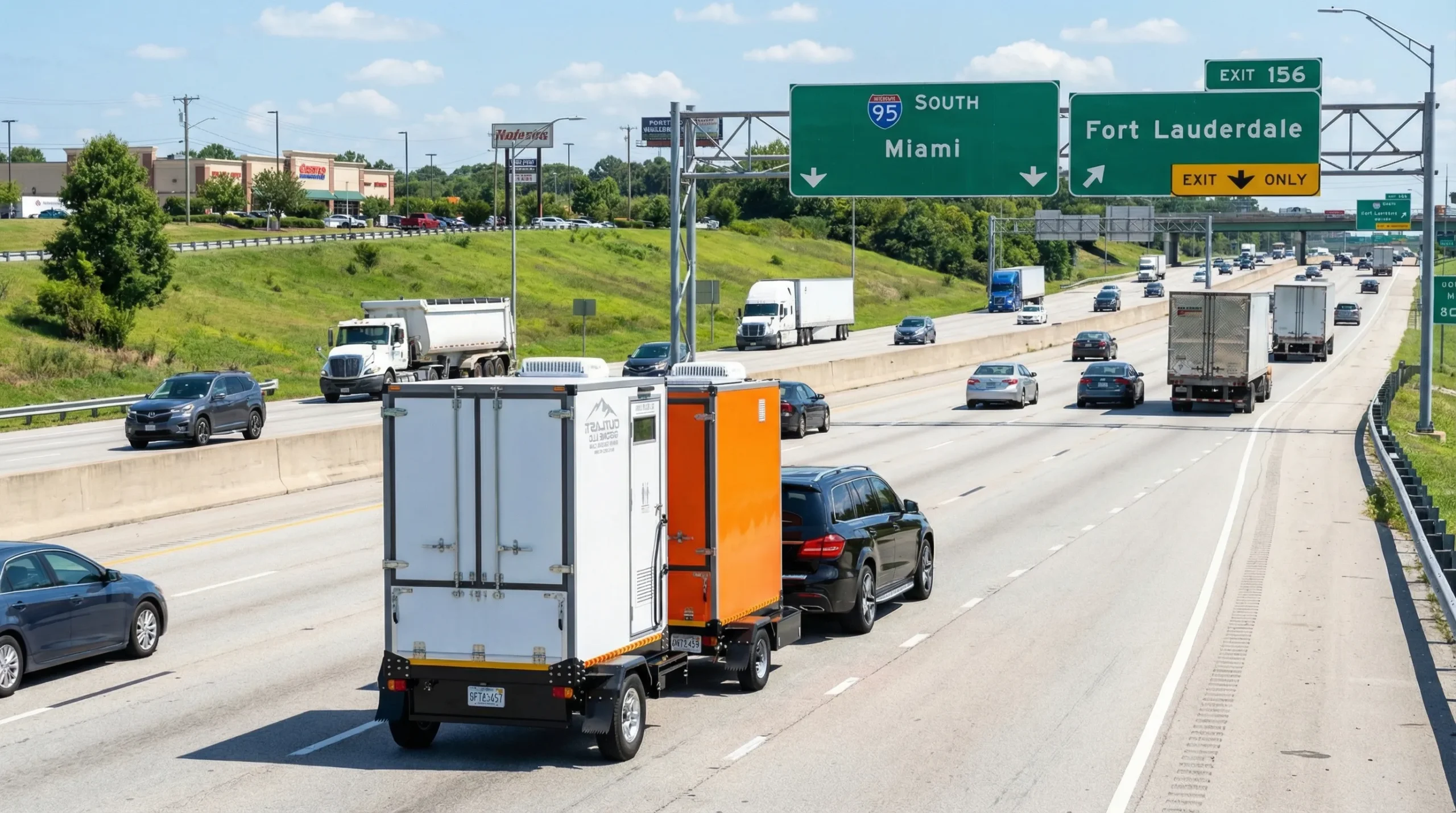
A restroom trailer is two things at once: a sanitation facility and a road-going vehicle. Most buyers evaluate the first and forget the second. When a trailer is non-compliant, the problems are not cosmetic they block the unit from doing its job.
⚠ Registration Problems
Without a valid VIN and DMV documentation, you may be unable to title or plate the trailer. An unregistrable trailer cannot legally travel on public roads defeating the purpose of a mobile restroom.
⚠ Transportation Restrictions
DOT roadside inspections can place an out-of-service order on a trailer with defective lighting, tires, or coupling hardware. A unit pulled off the road mid-route is downtime you’re paying for.
⚠ Environmental Violations
Improper wastewater handling or unauthorized discharge can trigger EPA-related penalties and local health-department citations. For government and municipal projects, a single violation can jeopardize the contract.
⚠ Legal Liability
If a non-compliant trailer breaks loose in transit or causes an incident because it lacked proper braking, lighting, or a breakaway system, the towing party can be exposed to liability that insurance may not cover.
⚠ Insurance Issues
Insurers and commercial fleet policies typically require a VIN and proof of road-legal construction. No VIN often means no coverage or a denied claim after the fact.
For buyers purchasing at fleet scale, these risks multiply across every unit. That is why procurement teams treat compliance as a gating requirement and why a DOT-compliant restroom trailer is worth more than a cheaper unit that can’t be registered.
What DOT Compliance Means
The U.S. Department of Transportation (DOT) sets the safety standards that govern vehicles and trailers traveling on public roads. For a restroom trailer, DOT compliance is about the unit’s behavior as a towed vehicle independent of what happens inside it.
- Trailer construction standards a frame and coupling engineered to carry the unit’s loaded weight safely, with rated tires and axles appropriate to that load.
- Lighting systems functioning tail lights, brake lights, turn signals, and reflectors so the trailer is visible and its movements are signaled to other drivers.
- Tow safety hardware a properly rated hitch coupling plus safety chains that retain the trailer if the primary coupling fails.
- Breakaway systems a mechanism that automatically applies the trailer’s brakes if it disconnects from the tow vehicle in motion, preventing a runaway trailer.
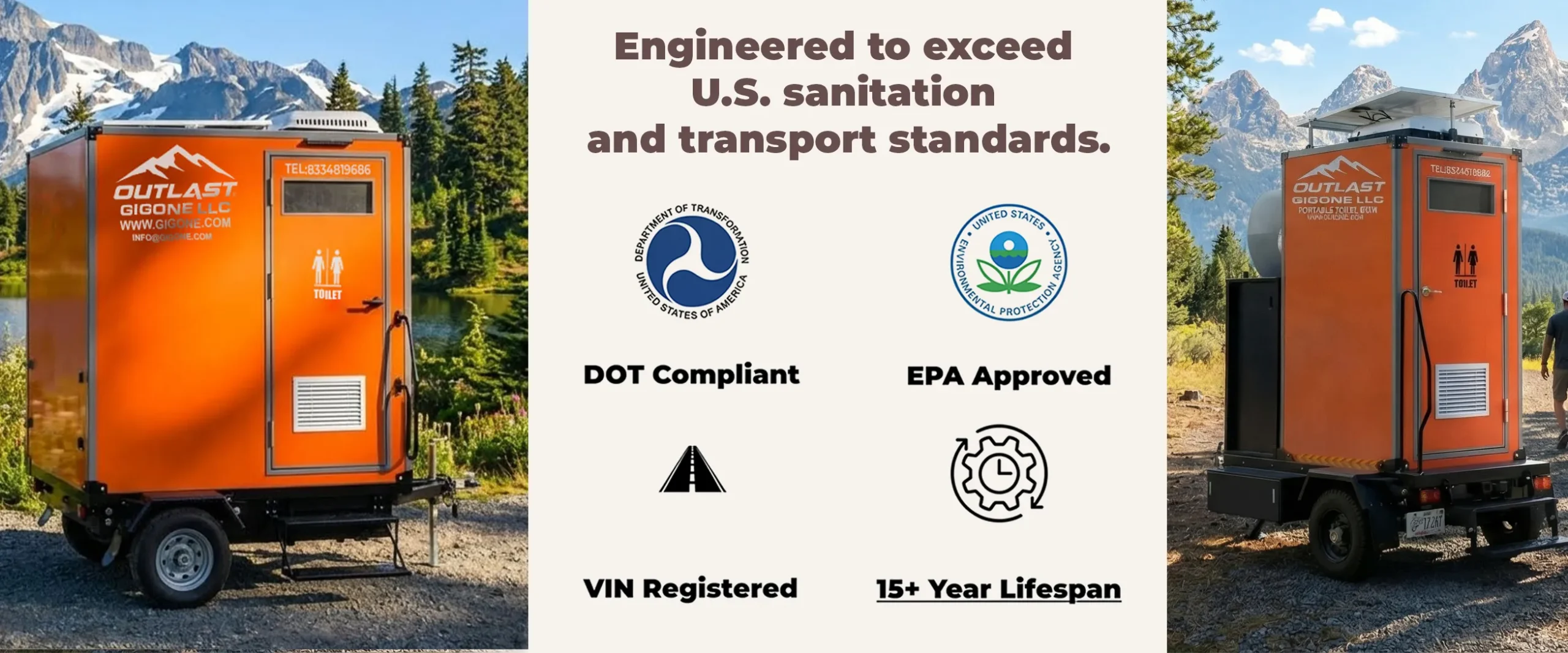
Buyer implications: Ask whether the trailer is built to DOT standards and what safety hardware is included as standard rather than optional. A unit that lists safety chains, a breakaway system, road-rated tires, and complete exterior lighting on its spec sheet is built to be towed legally. GIGONE units ship with reinforced safety chains, a breakaway system, traffic LED warning lights, and automatic exterior LED lighting as standard construction.

What VIN Certification Means
A Vehicle Identification Number (VIN) is the unique 17-character code assigned to a vehicle. For a restroom trailer, a valid VIN is the foundation of legal ownership and registration it is what tells a state, an insurer, and a future buyer that the unit is a real, traceable vehicle rather than an unidentified piece of equipment.
A VIN matters across the entire ownership lifecycle:
- Ownership verification the VIN ties the trailer to a title and an owner of record, establishing clear, provable ownership.
- Registration process state DMVs use the VIN to title and register the trailer. No VIN typically means no registration.
- Resale value a VIN-certified trailer can be retitled and resold through normal channels. A unit without one is difficult to resell, transfer, or finance its resale value is impaired before it ever leaves your lot.
- Insurance and financing lenders and insurers reference the VIN. It’s frequently a prerequisite for both coverage and capital.
🔍 Verify a VIN in 30 seconds
You can verify any U.S. VIN through the NHTSA decoder at vpic.nhtsa.dot.gov/decoder, the official tool maintained by the National Highway Traffic Safety Administration.
Before buying, confirm the trailer carries a valid VIN and a Vehicle ID Plate, and that the number decodes correctly. For the full process, see our guide to the VIN-certified restroom trailer standard.
Understanding DMV Registration Requirements
DMV registration is the step that turns a VIN-bearing trailer into a road-legal, plated vehicle. The VIN is the identity; registration is the legal permission to use that identity on public roads.
①
Documentation
A manufacturer’s certificate of origin or bill of sale, proof of the VIN, and weight/specification information the state uses to classify and tax the trailer.
②
State Requirements
Registration rules vary by state. Some classify utility or commercial trailers by weight, require specific inspections, or mandate particular plates. The VIN and paperwork remain the common foundation everywhere.
③
Titling & Plates
Once documentation is accepted, the state issues a title and registration plate that make the trailer legal to tow.
💡 Why verify registration readiness before purchase
The most expensive compliance surprise is discovering, after delivery, that you can’t assemble the paperwork your state demands. Ask the manufacturer explicitly whether the unit ships with everything needed to register in your state don’t assume it does. Our DMV registration for restroom trailers overview details the documents to request up front.
EPA Waste Compliance Explained
While DOT, VIN, and DMV govern the trailer as a vehicle, the Environmental Protection Agency (EPA) framework together with state and local health departments governs what the restroom does with waste. For sanitation equipment, this is where environmental liability lives.
EPA-aligned waste compliance concerns three things:
- Waste handling containing human waste and wastewater securely, with no leaks or uncontrolled release.
- Wastewater management keeping gray water (sinks) and black water (toilets) managed correctly and within sealed tanks until proper disposal.
- Controlled discharge emptying the system only into authorized, centralized treatment infrastructure rather than onto the ground or into storm drains.
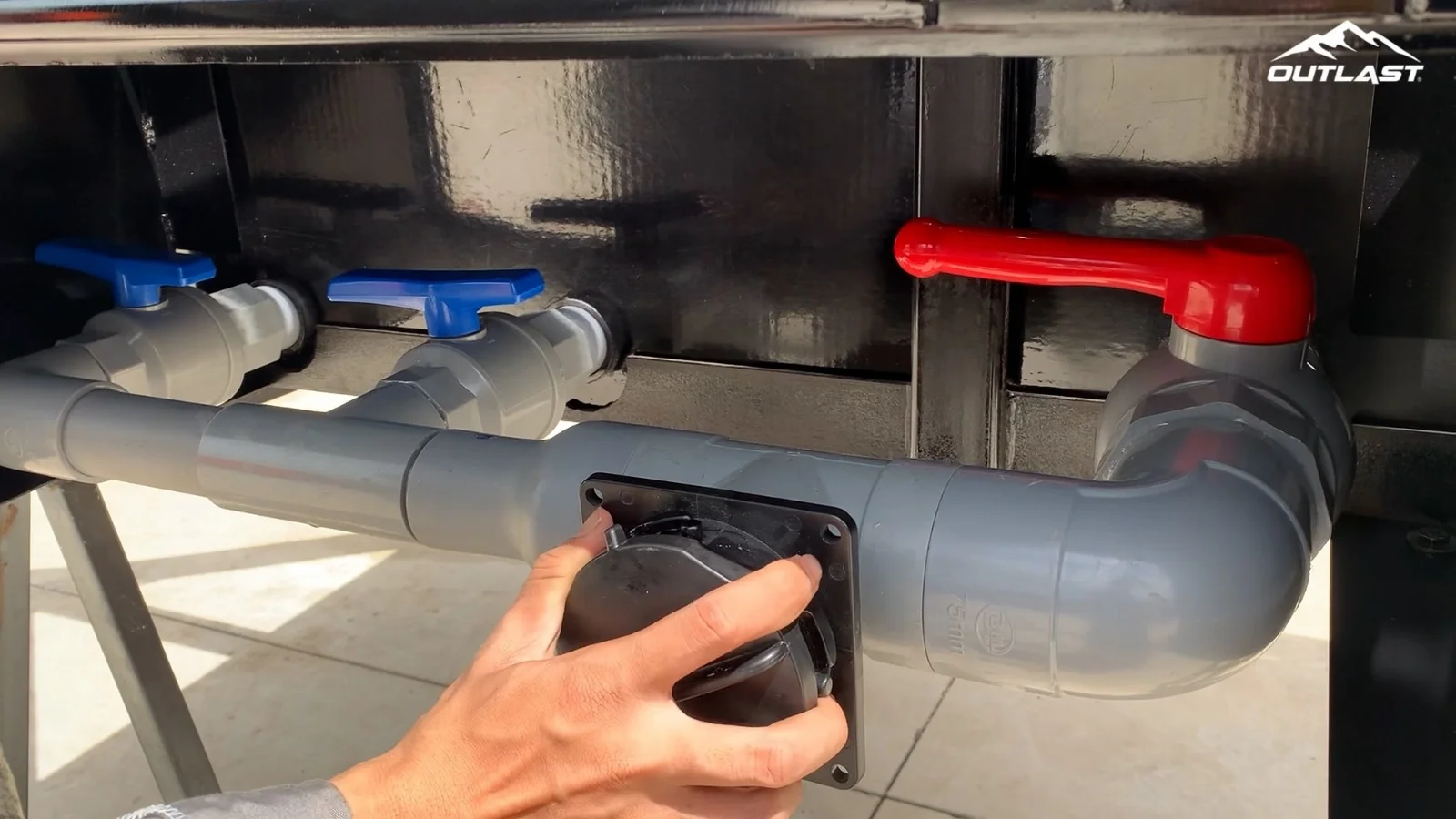
How GIGONE’s Solid-Liquid Separation System Works
Valve 1
Filtered water discharge
Valve 2
Settled sludge discharge
Valve 3
Full solid waste discharge
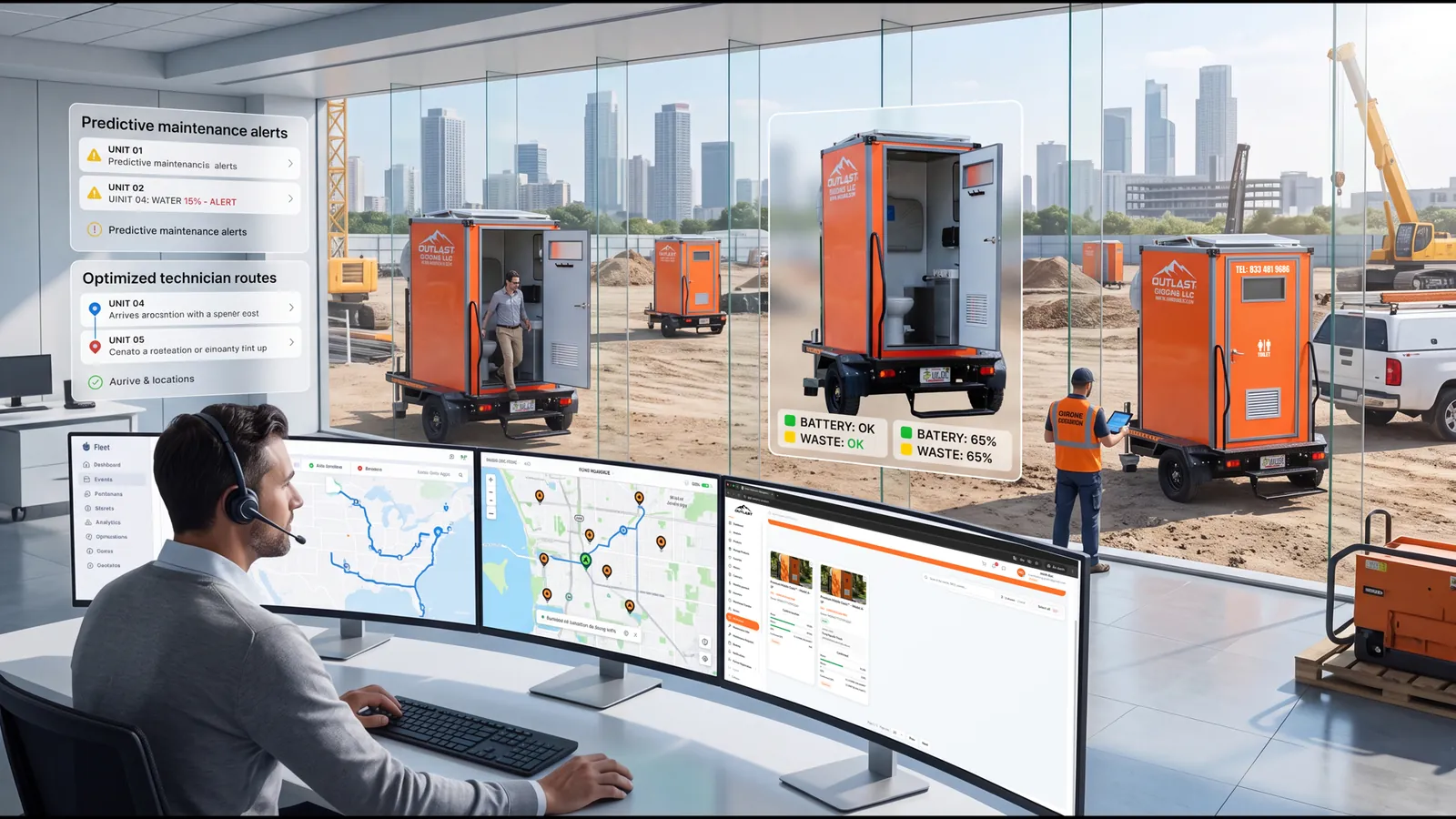
Separating the waste streams reduces clogging and odor and lets the unit connect cleanly to centralized treatment. A waste-level display panel supports proactive servicing before tanks overflow, and gray water from the washbasin is discharged separately to reduce load on the main tank. EPA waste compliance →
How GIGONE Designs for Compliance
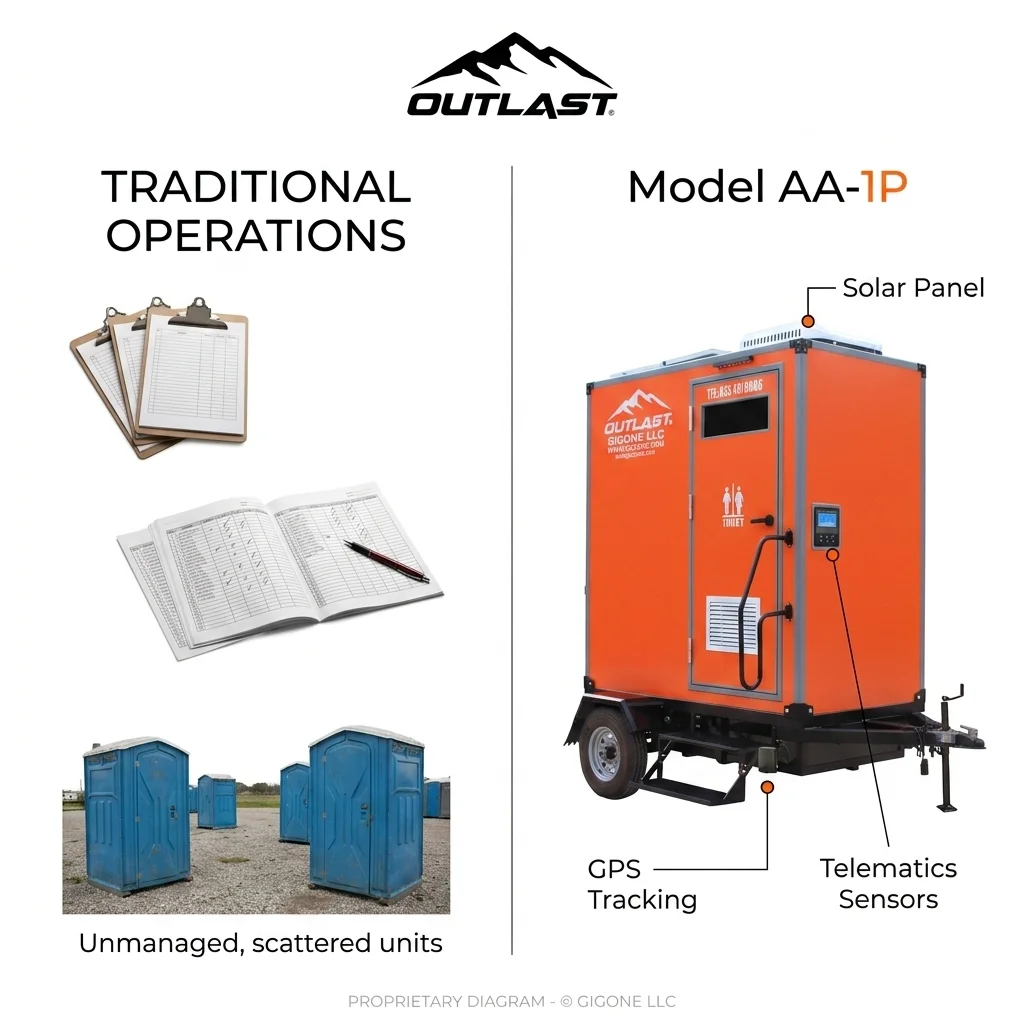
GIGONE is a U.S.-focused manufacturer, the mobile restroom trailers in the Mobile Oasis™ line are engineered so that DOT, VIN, DMV, and EPA compliance are built in rather than retrofitted. In practice that means a buyer receives a unit that is designed to be road-legal, registrable, and environmentally sound on arrival.
DOT · Road & Tow Safety
Reinforced safety chains and a breakaway system on the trailer hitch, traffic LED warning lights, automatic exterior LED lighting, high-load tires, and anti-slip foldable steps the hardware that keeps a towed unit safe and inspection-ready.
VIN · Identity & Ownership
Each trailer carries a Vehicle ID Plate so the unit has a traceable identity that can be verified and titled.
DMV · Registration Readiness
Units ship with a valid registration plate and the documentation a buyer needs to title and register the trailer.
EPA · Waste & Environment
The three-valve solid-liquid waste separation system with controlled, external discharge connection to centralized treatment engineered to contain waste and minimize environmental impact.

These are construction facts about how the trailers are built. They are also why GIGONE positions compliance as a core product attribute: for construction sites, government projects, parks, events, and rental fleets, a unit that is compliant from the factory removes the registration and environmental risk that buyers of gray-market imports inherit.
How to Verify Whether a Restroom Trailer Is Truly Compliant
Use this checklist before committing to any restroom trailer purchase. A genuinely compliant unit will pass every line; a non-compliant one usually fails several.
- ✅ VIN present and valid decodes on the NHTSA decoder
- ✅ Vehicle ID Plate physically affixed to the trailer
- ✅ Registration plate / readiness ships with required documents
- ✅ DOT tow safety hardware hitch, chains, breakaway standard
- ✅ Complete exterior lighting tail, brake, turn, reflectors
- ✅ Load-rated running gear tires and axles rated for loaded weight
- ✅ Sealed waste system black and gray water, no field leakage
- ✅ Controlled discharge multi-valve, centralized treatment connection
- ✅ Documentation package MCO, VIN docs, weight/spec sheet
Compliant vs. non-compliant restroom trailer at a glance
| Compliance factor | Compliant (manufacturer-built) | Non-compliant / gray-market |
|---|---|---|
| VIN | Valid 17-char, decodes on NHTSA | Missing, fake, or undecodable |
| Vehicle ID Plate | Affixed and traceable | Absent |
| DMV registration | Registration-ready with docs | Often impossible |
| DOT tow safety | Chains + breakaway standard | Missing or optional |
| Exterior lighting | Complete and functional | Incomplete / non-compliant |
| Waste/EPA handling | Sealed tanks, controlled discharge | Uncontrolled or unclear |
| Insurability | Insurable (VIN on file) | Frequently uninsurable |
| Resale value | Retitle-able, retains value | Difficult to resell |
Frequently Asked Questions
What does DOT compliance mean for a restroom trailer?
DOT compliance means the trailer is built to U.S. Department of Transportation road-safety standards as a towed vehicle: rated frame and coupling, complete lighting, load-rated tires, safety chains, and a breakaway system that brakes the trailer if it disconnects in transit. It governs how the unit travels, not what’s inside it.
Why does a restroom trailer need a VIN?
A VIN is the trailer’s unique identity. It’s required to title and register the unit with a state DMV, to insure it, and to finance or resell it. A trailer without a valid VIN often can’t be registered or insured, and is difficult to resell. Verify any U.S. VIN through the NHTSA decoder at vpic.nhtsa.dot.gov/decoder.
Can I register a restroom trailer at the DMV without a VIN?
Generally no. State DMVs use the VIN to title and register a trailer. Without a valid VIN and supporting documentation such as a certificate of origin or bill of sale and weight/spec details, most states will not issue a title or plate, which means the trailer can’t legally travel on public roads.
Are GIGONE restroom trailers DOT, VIN, DMV, and EPA compliant?
Yes. GIGONE manufactures trailer-mounted units built to U.S. DOT, VIN, DMV, and EPA standards. Each ships with a Vehicle ID Plate and a valid registration plate, DOT tow-safety hardware including safety chains and a breakaway system, and a solid-liquid waste separation system for controlled, EPA-aligned discharge.
What is solid-liquid waste separation and why does it matter for EPA compliance?
It’s a system that separates the waste stream into distinct outputs filtered water, settled sludge, and solid waste each on its own discharge valve. Separating the streams reduces clogging and odor and lets the trailer connect to centralized treatment for controlled, traceable discharge, which lowers the risk of environmental violations.
What is a breakaway system on a restroom trailer?
A breakaway system automatically applies the trailer’s brakes if it separates from the tow vehicle while moving. It prevents a runaway trailer and is a core DOT road-safety feature. GIGONE trailers include a breakaway system and reinforced safety chains as standard.
How can I verify whether a restroom trailer is truly compliant?
Confirm the unit has a valid VIN that decodes on the NHTSA decoder, a Vehicle ID Plate, registration-ready documentation, DOT tow-safety hardware (safety chains and breakaway system), complete lighting, and a sealed waste system with controlled discharge. Buying from an accountable manufacturer rather than an anonymous importer is the strongest safeguard.
Is a cheaper non-compliant or gray-market trailer worth it?
Rarely. A non-compliant trailer can be impossible to register, uninsurable, illegal to tow, and hard to resell and it can expose you to environmental and liability penalties. The upfront savings are usually erased by registration problems, downtime, and impaired resale value.
Ready to Buy or Distribute a Compliant Restroom Trailer?
Compliance is the difference between a trailer that works on day one and an asset that sits unregistered. GIGONE builds DOT, VIN, DMV, and EPA-aligned mobile restroom trailers for construction sites, government projects, parks, events, disaster response, and sanitation rental fleets.




Leave a Reply
You must be logged in to post a comment.