
For many U.S. businesses, sanitation equipment is no longer just an operational necessity. In April 2026, it has become a strategic investment tied directly to customer experience, workforce satisfaction, regulatory compliance, and business scalability. That is why the question of Lease vs Buy Restroom Trailer deserves more than a quick cost comparison.
Table of Contents
Whether you operate in construction, disaster response, outdoor events, hospitality, public infrastructure, or facility services, the way you acquire a restroom trailer can affect your monthly cash flow, balance sheet strength, service flexibility, and long-term profitability. At Gigone LLC, we view this decision as part of a broader growth strategy, not just a procurement task.
Some businesses need short-term mobility and minimal capital commitment. Others need ownership, asset control, and recurring revenue opportunities. And for many growing companies, the smartest answer may sit between those two extremes. Understanding the financial and operational implications of each model is the key to making the right move.
Understanding Lease vs Buy Restroom Trailer
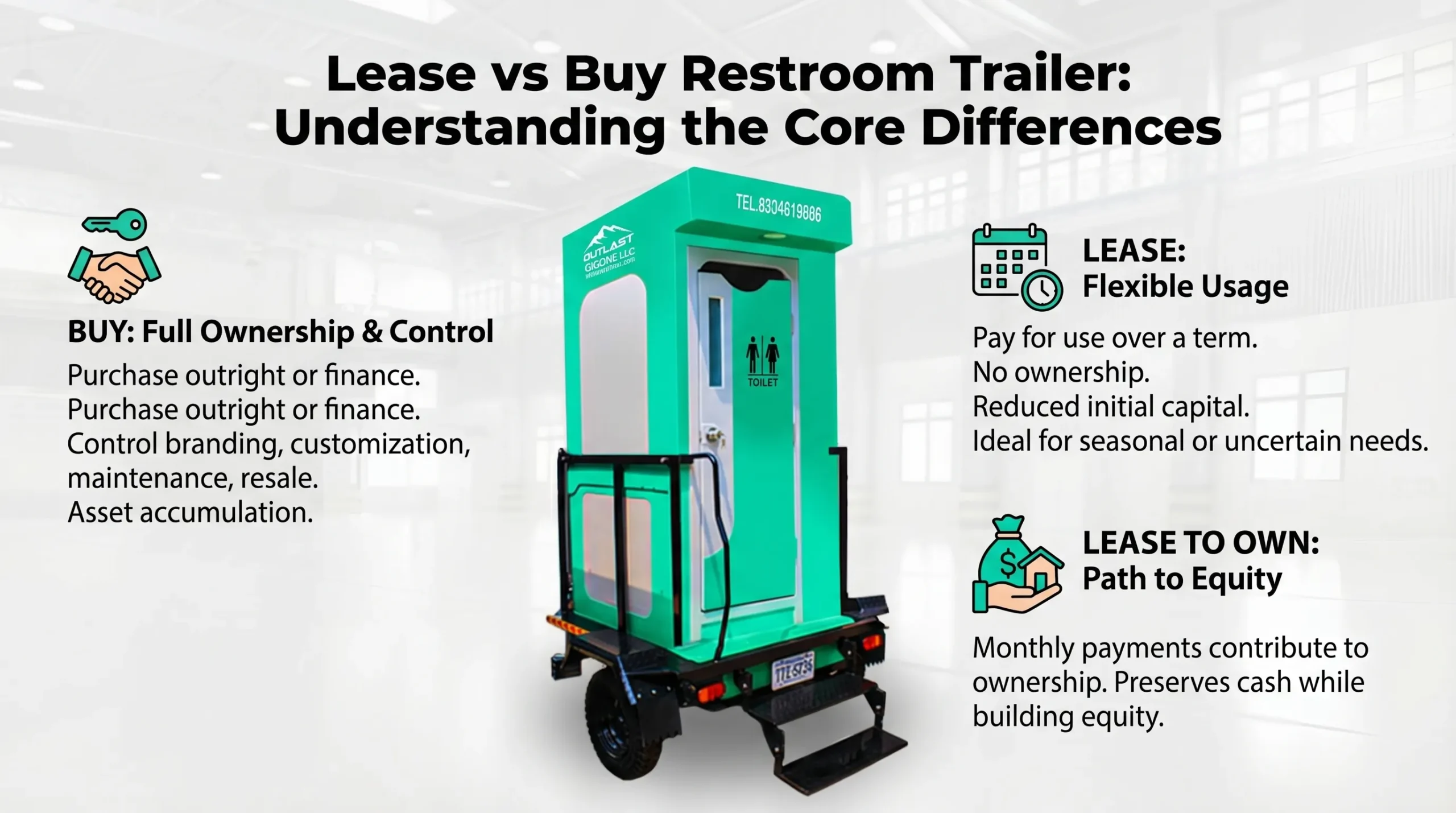
The core difference in Lease vs Buy Restroom Trailer comes down to ownership, financial structure, and operational control.
When you buy a restroom trailer, you purchase the unit outright or through restroom trailer financing. This gives your business full ownership rights. You control branding, customization, scheduling, upgrades, maintenance planning, and eventual resale. A purchased trailer becomes a business asset and may support long-term enterprise value.
Leasing works differently. Under a lease arrangement, your business pays for the right to use the trailer for a defined term without owning it at the end. This structure reduces the initial capital burden and can support businesses that value flexibility over asset accumulation. In many cases, a portable restroom trailer rental agreement is especially useful when usage is seasonal, event-based, or uncertain.
A third option, lease to own restroom trailer, blends the advantages of both models. Instead of paying solely for temporary use, your monthly payments contribute toward eventual ownership. This option can appeal to companies that want to preserve cash while still building long-term equity.
When Leasing Makes More Sense
Leasing can be the better business choice when flexibility matters more than ownership.
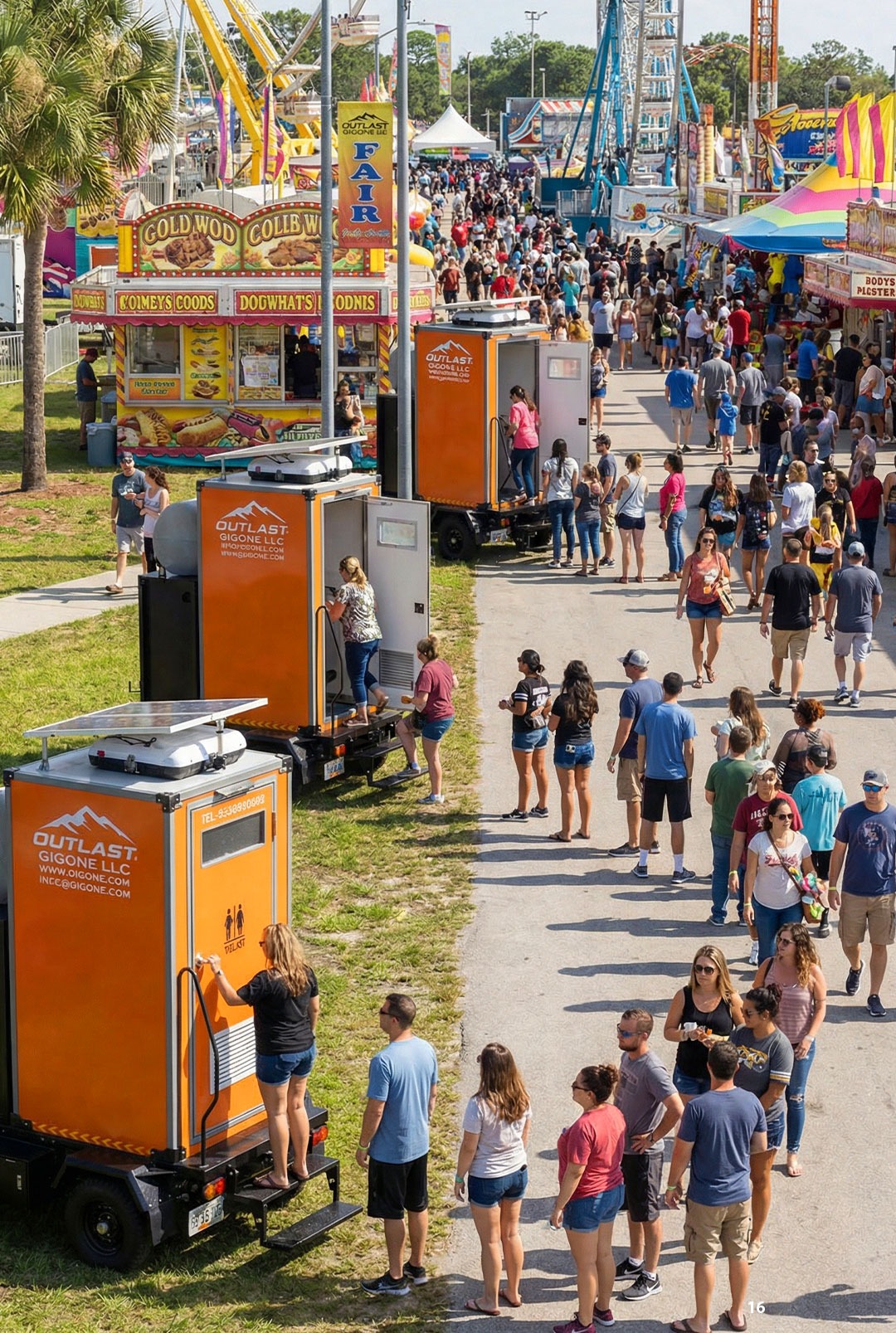
If your company supports short-term projects, temporary contracts, seasonal festivals, emergency deployments, or pilot market expansion, leasing can reduce risk significantly. A portable restroom trailer rental lets you access quality equipment without making a large upfront investment in an asset you may not need year-round.
Leasing is also valuable when cash preservation is a priority. In April 2026, many businesses across the U.S. continue to balance inflation-sensitive costs, labor pressures, and tighter operating margins. In that environment, leasing can help protect working capital for hiring, fuel, logistics, business development, and marketing.
Another advantage is adaptability. If your service demand changes quickly, a leased unit may allow your operation to scale faster or shift specifications more easily. This matters for businesses serving dynamic sectors where event size, project duration, or customer requirements can vary month to month.
Leasing can also reduce lifecycle concerns. Depending on the agreement, service support, maintenance coverage, and equipment replacement terms may be more manageable than they would be under full ownership. For companies entering the restroom trailer segment for the first time, that lower complexity can be highly attractive.
When Buying Is the Better Long-Term Investment
Buying often becomes the smarter option when your business expects steady, repeated, or year-round use.
If your company regularly serves construction sites, multi-day events, municipalities, industrial operations, film production, or long-term site services, buying can lower your total cost over time. Rather than making continuing lease payments, you build ownership in an asset that can continue generating value after it is paid off.
Ownership also gives you full operational control. A restroom trailer for sale can be customized to fit your market positioning, client expectations, and service model. You may want premium interiors for upscale weddings, durable features for industrial use, ADA-compliant configurations, branded exteriors, or specialized utility systems. When you own the trailer, those decisions remain in your hands.
Financially, purchasing can strengthen your asset base. The trailer may retain resale value, support depreciation strategies, and create more predictable long-term economics than an endless cycle of leasing. Businesses with stable demand often discover that ownership aligns better with strategic planning and gross margin improvement.
There is also a revenue expansion angle. If your company plans to rent units to third parties, support recurring service contracts, or grow a sanitation fleet, ownership provides much greater freedom. A purchased trailer is not just equipment; it can become a revenue-producing asset.
The Financial Lens: Cash Flow, Equity, and Risk
The most effective Lease vs Buy Restroom Trailer decision starts with financial clarity.
Leasing generally offers lower upfront costs and more predictable short-term expenses. That can improve liquidity, especially for small and mid-sized businesses managing multiple priorities. If preserving capital is essential, leasing may support better near-term resilience.
Buying requires a larger immediate commitment unless you use restroom trailer financing. Financing can spread costs over time while allowing your business to move toward ownership. This can be attractive if the trailer will be heavily utilized and produce reliable income or operational value over several years.
The key question is not simply “Which option costs less today?” It is “Which option creates stronger business value over the period we expect to use the unit?” A lower monthly payment may look attractive at first, but if your business uses the trailer continuously for years, ownership could deliver far better total economics.
A simple way to think about it is this: leasing tends to optimize flexibility, while buying tends to optimize long-term value. Your ideal choice depends on whether your current priority is agility or equity.
Operational Factors Businesses Should Evaluate

Lease vs Buy Restroom Trailer for Usage Frequency
Usage frequency is one of the clearest decision points in Lease vs Buy Restroom Trailer planning.
If you only need a unit several times per year, leasing is often the more efficient path. If the trailer will be deployed continuously or across multiple recurring contracts, buying usually becomes more logical. High utilization tends to justify ownership because the asset supports your operations more consistently.
Lease vs Buy Restroom Trailer for Business Growth
Growth stage matters just as much as usage.
A newer company may not want to lock capital into equipment too early, especially while validating demand. In that case, lease to own restroom trailer programs can offer a balanced path. You gain immediate access to the unit while preserving room to grow. As revenue stabilizes, you transition toward ownership without the same level of upfront strain.
More mature businesses, however, may benefit from ownership because they already understand customer demand, operating patterns, and fleet requirements. For them, buying can be a more disciplined long-term move.
Lease vs Buy Restroom Trailer for Maintenance Responsibility
Maintenance is another major consideration.
With ownership, your company is responsible for upkeep, repair scheduling, part replacement, cleanliness standards, and long-term condition management. That control can be beneficial, but it requires systems, staff readiness, and budget discipline.
With leasing or portable restroom trailer rental, some service responsibilities may be streamlined depending on the contract. This can reduce administrative burden and make day-to-day operations easier, especially for businesses without dedicated maintenance infrastructure.
Lease vs Buy Restroom Trailer for Tax Planning
Tax treatment can also influence the final decision.
Lease payments may be treated as operating expenses, while purchased units may qualify for depreciation or other tax-related benefits, depending on your structure and applicable regulations. Because tax outcomes vary by business entity and jurisdiction, Gigone LLC recommends reviewing the numbers with your CPA or tax advisor before making a commitment.
Why Lease to Own Restroom Trailer Is Growing in Popularity
For many businesses in April 2026, the most practical solution is lease to own restroom trailer.
This model addresses a common challenge: businesses want ownership, but they do not want to absorb the full upfront cost immediately. Lease-to-own arrangements provide access now while creating a path to future equity. That structure can be ideal for growing operators, expanding service fleets, or companies entering new regional markets.
From a budgeting perspective, lease-to-own can also create more stability. Monthly payments are easier to forecast, and the business can plan around a defined ownership timeline. At the same time, it avoids the feeling of “paying forever” without building asset value.
For decision-makers who feel caught between flexibility and long-term control, lease-to-own often provides a practical middle ground.
How Gigone LLC Helps Businesses Make the Right Choice
At Gigone LLC, we understand that no two business models are the same. A construction company managing long-duration job sites will evaluate equipment differently than an event rental company serving seasonal luxury weddings. That is why the right Lease vs Buy Restroom Trailer decision must reflect your actual usage model, capital strategy, and growth plans.
We help clients assess:
- Expected trailer utilization across the year
- Available capital and monthly budget thresholds
- Long-term ownership goals
- Maintenance capacity and service expectations
- Brand positioning and customization needs
- Expansion opportunities tied to fleet growth
Instead of approaching the trailer as a one-time purchase, we encourage businesses to evaluate it as part of a broader operational system. The right equipment strategy can improve service quality, unlock new revenue, strengthen client retention, and support long-term scale.
Final Perspective on Lease vs Buy Restroom Trailer
The best answer to Lease vs Buy Restroom Trailer depends on your business reality, not a generic rule.
Choose leasing if you need flexibility, lower upfront costs, and reduced long-term commitment. Choose buying if you need control, long-term savings, and asset ownership. Consider lease to own restroom trailer if you want a practical balance between immediate access and future equity.
In April 2026, businesses that make the strongest equipment decisions are the ones that align acquisition strategy with actual business goals. If your restroom trailer will play a meaningful role in customer service, field operations, or revenue generation, the decision deserves a careful and financially informed approach.
With the right planning, your trailer is not just a sanitation unit. It becomes a business tool that supports growth, professionalism, and operational reliability.
Frequently Asked Questions: Lease vs. Buy Restroom Trailers
Which option is more cost-effective for a 6-month construction project?
For a fixed, short-term duration like six months, leasing or a portable restroom trailer rental is typically more cost-effective. It allows you to avoid a large capital expenditure (CapEx) and eliminates the long-term responsibility of storage and maintenance once the project is completed. However, if you have back-to-back projects scheduled throughout the year, purchasing may offer a lower “per-day” cost over time.
Can I customize a leased restroom trailer with my company’s branding?
Generally, heavy customization (like full vinyl wraps or interior structural changes) is reserved for purchased units. Since leased trailers must be returned in their original condition, permanent modifications are restricted. If branding is a priority for your market positioning, buying gives you total creative and operational control.
What are the tax advantages of buying vs. leasing in the U.S.?
In the U.S., these options impact your taxes differently:
Buying: You may be able to take advantage of Section 179 deductions or accelerated depreciation, allowing you to deduct the purchase price of the equipment in the year it’s put into service.
Leasing: Lease payments are usually treated as operating expenses, which can be fully deductible from your taxable income each month.
Note: Always consult with your CPA or tax advisor to see which model fits your 2026 tax strategy.
Who is responsible for maintenance and repairs?
Ownership: You are fully responsible for the upkeep, winterization, and repairs of the unit. This requires having a dedicated maintenance team or a service contract with a local provider.
Leasing: Depending on your agreement with Gigone LLC, some maintenance support or equipment replacement terms may be included, reducing your administrative and operational burden.
How does the “Lease-to-Own” program work?
Our Lease-to-Own model is designed for growing businesses that want to preserve cash flow today while building equity for tomorrow. A portion of your monthly lease payment is applied toward the eventual purchase price. It’s an ideal “middle ground” for companies that expect to need the asset long-term but prefer to spread out the financial commitment.
Are your trailers ADA-compliant for public events?
Yes. Whether you choose to lease or buy, Gigone LLC offers a range of units that meet ADA (Americans with Disabilities Act) requirements. Ensuring accessibility is a critical part of regulatory compliance for public infrastructure and large-scale events in the U.S.
Does Gigone LLC offer financing for purchases?
Absolutely. We provide various restroom trailer financing options to help businesses transition from renting to owning. Financing allows you to gain the benefits of ownership (like asset appreciation and control) while keeping your monthly payments manageable.

Leave a Reply
You must be logged in to post a comment.