
When 20,000 attendees pour out of a main stage during a 15-minute set change, restroom infrastructure becomes the single most fragile point of an event’s operations. When toilets fail, they fail publicly, visibly, and at scale.
This is why modern organizers are no longer “renting portable toilets.” They are investing in event sanitation infrastructure — systems engineered to absorb crowd surges, control odor in extreme weather, cut water logistics, and eliminate the operational risk that gravity-based setups carry by design.
At the center of this shift: vacuum flush systems for large events.
Table of Contents
The Real Operational Pressure
Large-event sanitation is not a steady-state problem. It is a surge problem:
- Surge load. 60–70% of restroom demand collapses into a handful of 10–20 minute windows between sets, halftime, or meal breaks.
- Heat and odor. Outdoor summer units pass 40°C inside. Gravity systems with slow waste evacuation become odor amplifiers within hours.
- Water logistics. Every liter is trucked in, every liter trucked out. At scale, one of the largest hidden cost lines on an event budget.
- Overflow risk. A single blocked gravity line during peak hours can take an entire restroom block offline in front of thousands of attendees.
- Temporary venue limits. Fields, parking lots, and remote sites don’t offer the plumbing grades gravity systems assume.
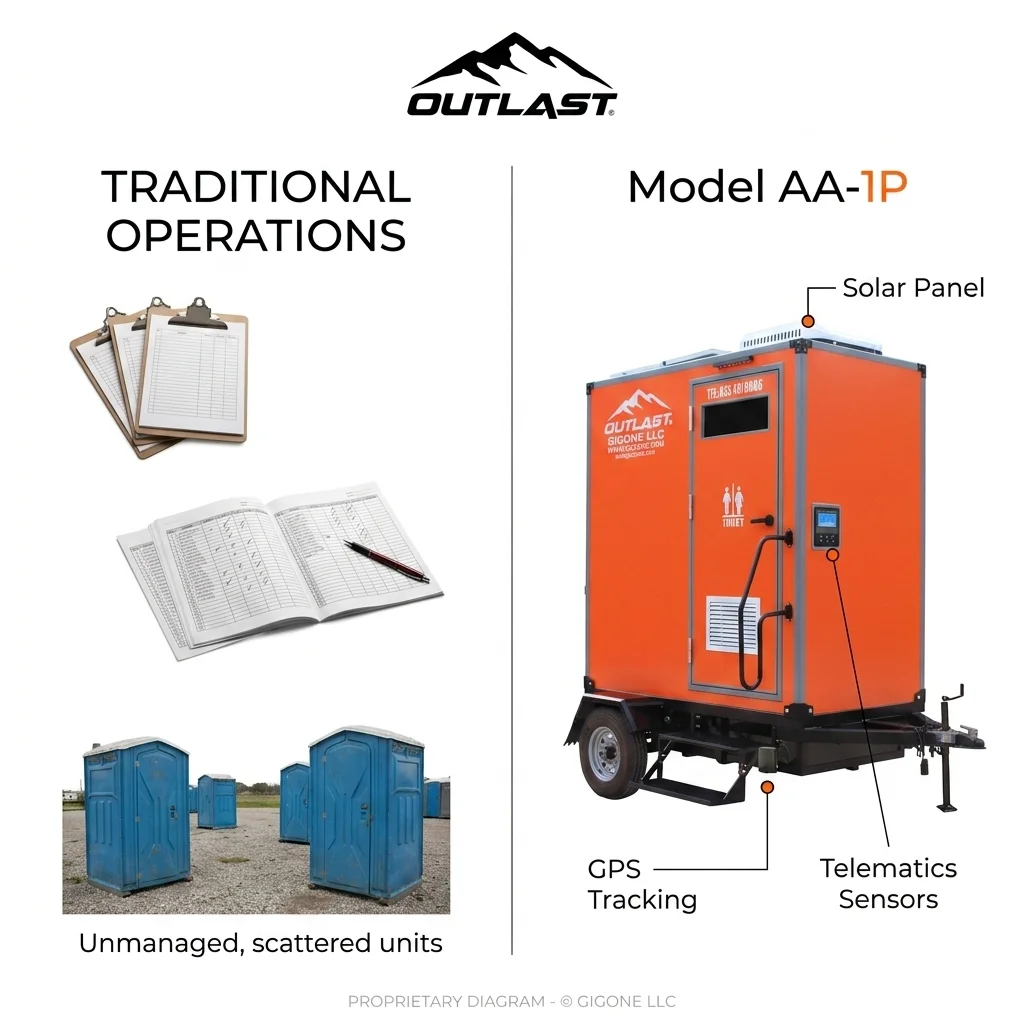
Most portable restroom vendors do not solve these. They deliver units and leave. This is the gap GIGONE is built to close.
Vacuum vs Gravity, Under Real Event Load
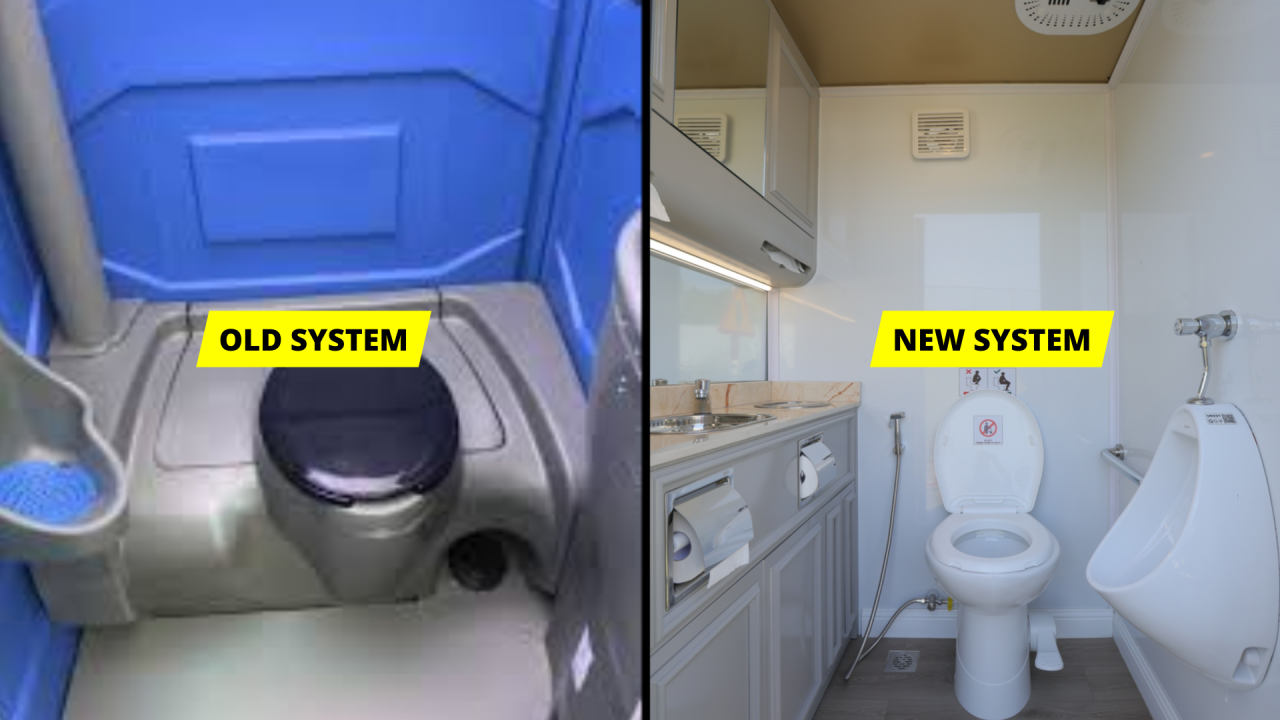
A vacuum flush system uses negative air pressure not water and gravity to actively pull waste through sealed pipelines. The same core technology runs on aircraft and cruise ships, where reliability under continuous load is non-negotiable.
Gravity systems flush with 6–9 liters per use, depend on pipe slope, and queue waste during surges until partial blockages turn into full line failures. Recovery from a single clog can take 30–90 minutes offline.
Vacuum systems flush with 0.5–1.2 liters — an 80–90% reduction — through sealed lines that contain odor at the source and route flexibly across uneven terrain. Performance does not degrade when 200 units flush in the same minute.
Why Vacuum Wins at Scale
- Absorbs surge load. When demand spikes 5–8x in a 10-minute window, gravity queues waste, vacuum clears it. The difference shows up as line length at the most photographed moment of your event.
- Removes water from the operational equation. For a 3-day festival with 40,000 daily attendees, the gap between 6L and 1L per flush is hundreds of thousands of liters of tanker runs cut from the budget.
- Contains odor at the source. The difference between a restroom block that stays usable through day three and one that becomes a complaint magnet by midday on day one.
- Installs where gravity cannot. Stadium concourses, parking-lot festivals, remote rally sites, emergency response camps — vacuum infrastructure adapts to the site instead of forcing the site to adapt to it.
- Reduces operational risk. Fewer 2 a.m. crisis calls. Fewer angry posts the next morning.
The Industry Is Moving On
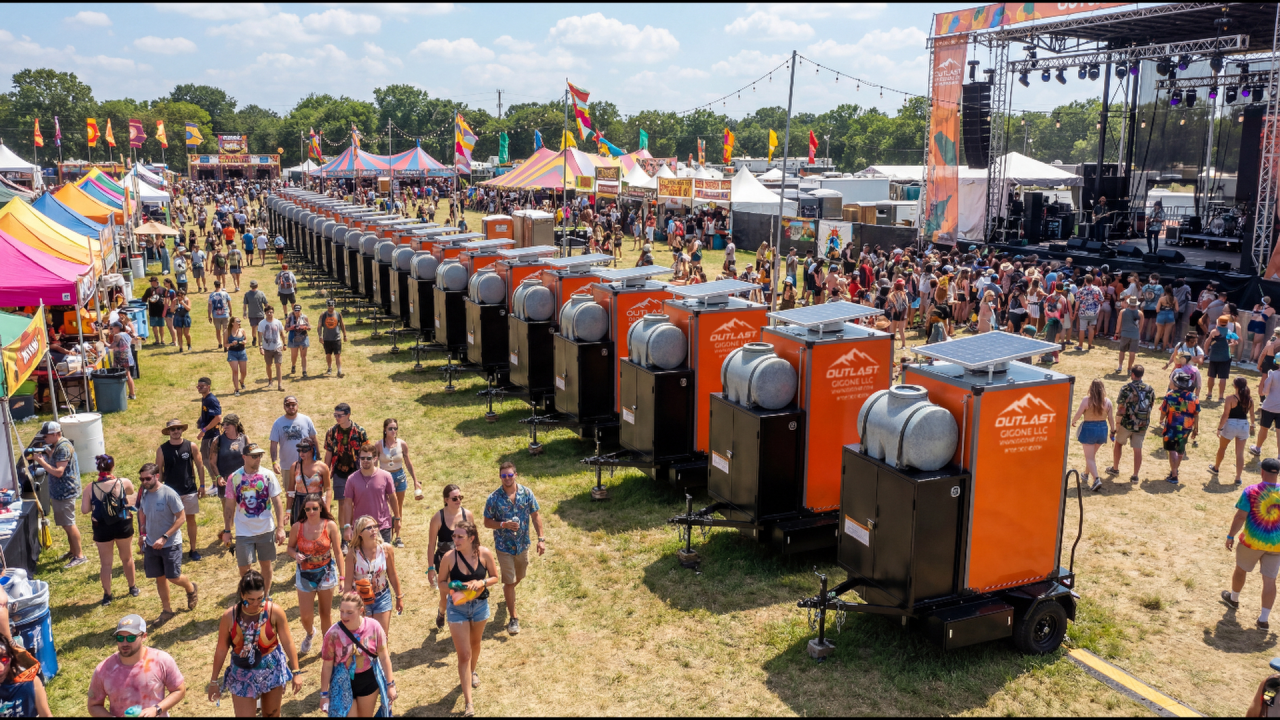
Gravity-based sanitation was built for a different era — smaller crowds, fixed venues, cheap water logistics. None of those assumptions hold anymore. The industry is moving toward smarter infrastructure, scalable systems, operational efficiency measured per attendee, and sustainability as a baseline expectation.
Vacuum flush technology is not a premium upgrade. It is becoming the default for any event serious about its operations.
About GIGONE
GIGONE designs and deploys event sanitation infrastructure for high-capacity, high-pressure environments — festivals, stadiums, exhibitions, and emergency deployments where sanitation has to perform at the same level as the rest of the production. We are not a restroom rental vendor. We are an infrastructure systems partner for organizers who cannot afford operational failure.
Frequently Asked Questions
1. At what event size do vacuum flush systems start to make sense?
The break-even point is usually around 2,000–3,000 concurrent attendees, or any multi-day event regardless of size. Below that, gravity units may still be cost-effective. Above it, the cost of water logistics, service downtime, and overflow risk shifts the math toward vacuum infrastructure.
2. Are vacuum systems significantly more expensive than gravity portables?
The per-unit rental is higher, but the total operational cost is usually lower once you include water delivery, wastewater removal, service crew hours, and clog response. For multi-day or high-density events, vacuum systems typically come out ahead on the full P&L.
3. Do vacuum systems require power on site?
Yes — they run on standard event power (generator or grid). A single vacuum station can support dozens of units, and power draw is modest compared to lighting, sound, or refrigeration loads already on site.
4. How long does installation take compared to traditional portables?
A full vacuum block is typically operational within a single setup day for most event configurations. Smaller pipe diameters, no excavation, and flexible routing make it faster to deploy than most organizers expect — particularly on uneven or built-up terrain.
5. What happens if a unit clogs during peak hours?
Vacuum systems are designed to isolate failures at the unit level instead of taking an entire line offline. Sealed pipelines also make service faster and cleaner. In practice, recovery time is a fraction of what gravity-line blockages require.
6. Can vacuum systems handle extreme weather — heat, rain, cold?
Yes. Sealed-line transport actually performs better in heat than gravity systems because waste does not sit and ferment in open pipes. Cold-weather and rainy-site deployments are also standard for the technology.
7. How is wastewater handled at the end of the event?
Vacuum systems concentrate waste with far less water, which means smaller storage volumes and fewer pump-out trips. For most events, this cuts wastewater logistics by 70–80% compared to a gravity setup of the same capacity.
8. Does GIGONE handle the operational side, or just deliver the equipment?
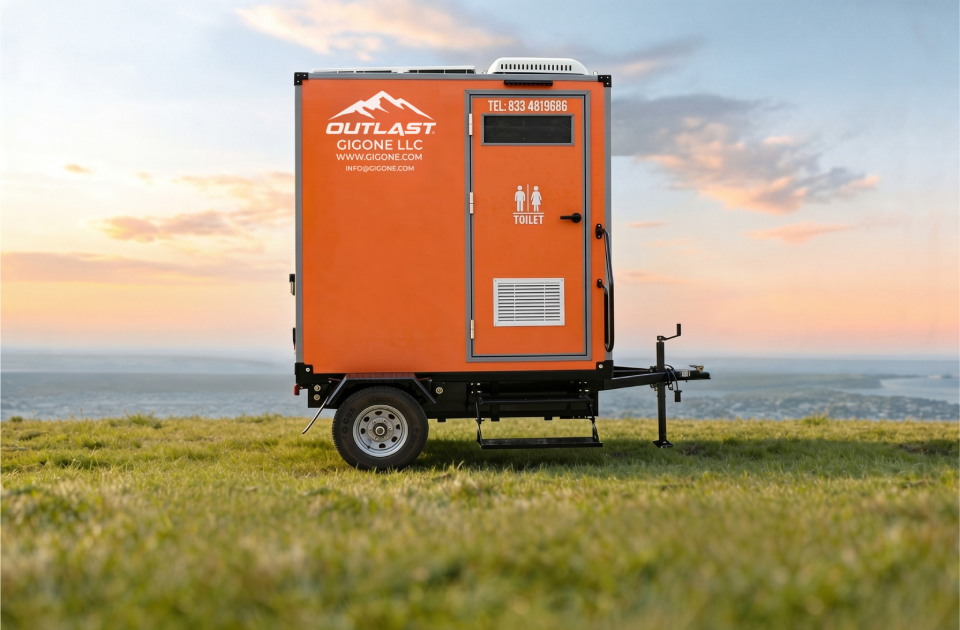
GIGONE operates as an infrastructure partner, not a rental vendor. That includes site planning, surge-load sizing, installation, on-site service crew during the event, and tear-down. Organizers get a system that performs, not a stack of units in a parking lot.

Leave a Reply
You must be logged in to post a comment.