
In the portable sanitation industry, durability is not a feature — it is the foundation of operational viability.
For public infrastructure projects, long-term construction sites, industrial deployments, and professional rental operations, portable restrooms are expected to perform reliably for years, not days. Structural failure, material degradation, or weather vulnerability quickly translates into higher operating costs, safety risks, and reputational damage.
Premium Mobile Oasis™ Models A-1P and AA-1P are engineered specifically to address these realities. Designed as long-term, semi-permanent mobile sanitation systems, both models prioritize structural integrity, material resilience, and lifecycle efficiency — delivering a design lifespan exceeding 15 years under demanding operating conditions. Our company operates extensively in Florida, Georgia, Alabama, South Carolina, and Tennessee.
This article explores the engineering principles, material choices, and compliance standards that make A-1P and AA-1P a long-term investment rather than a short-term expense.
Table of Contents
1. Engineering Philosophy: Designed for Continuous Operation
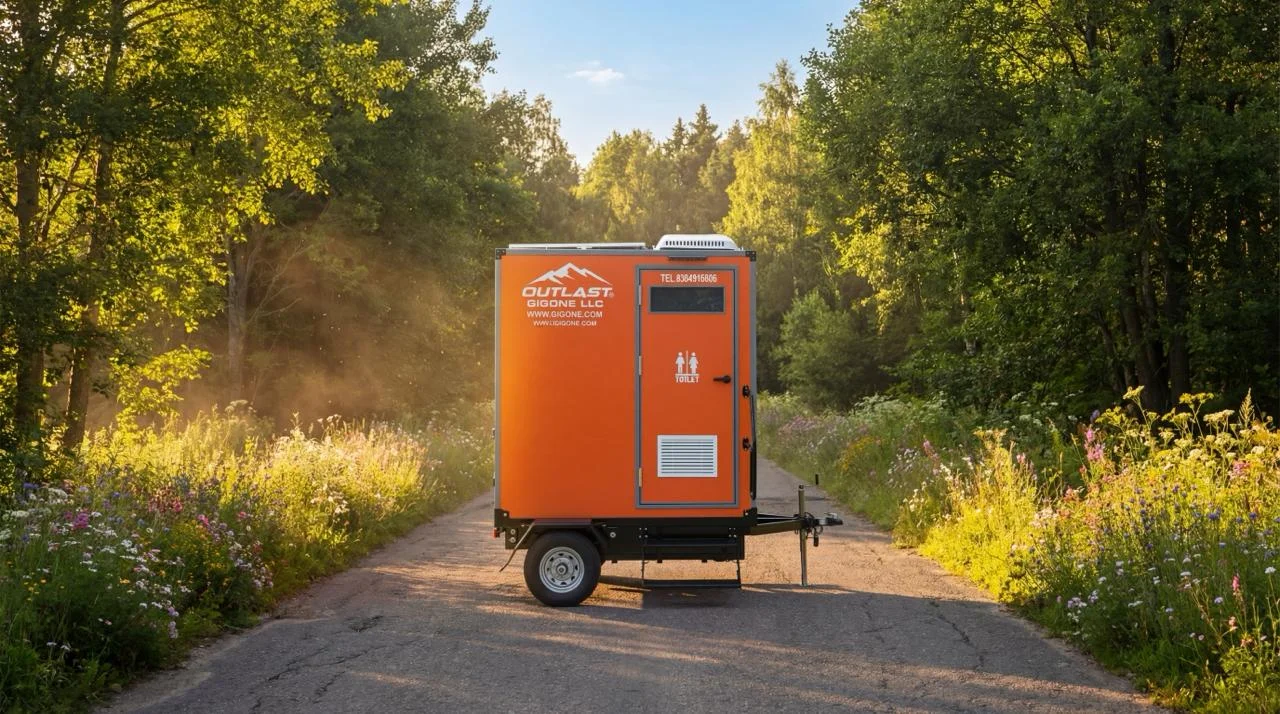
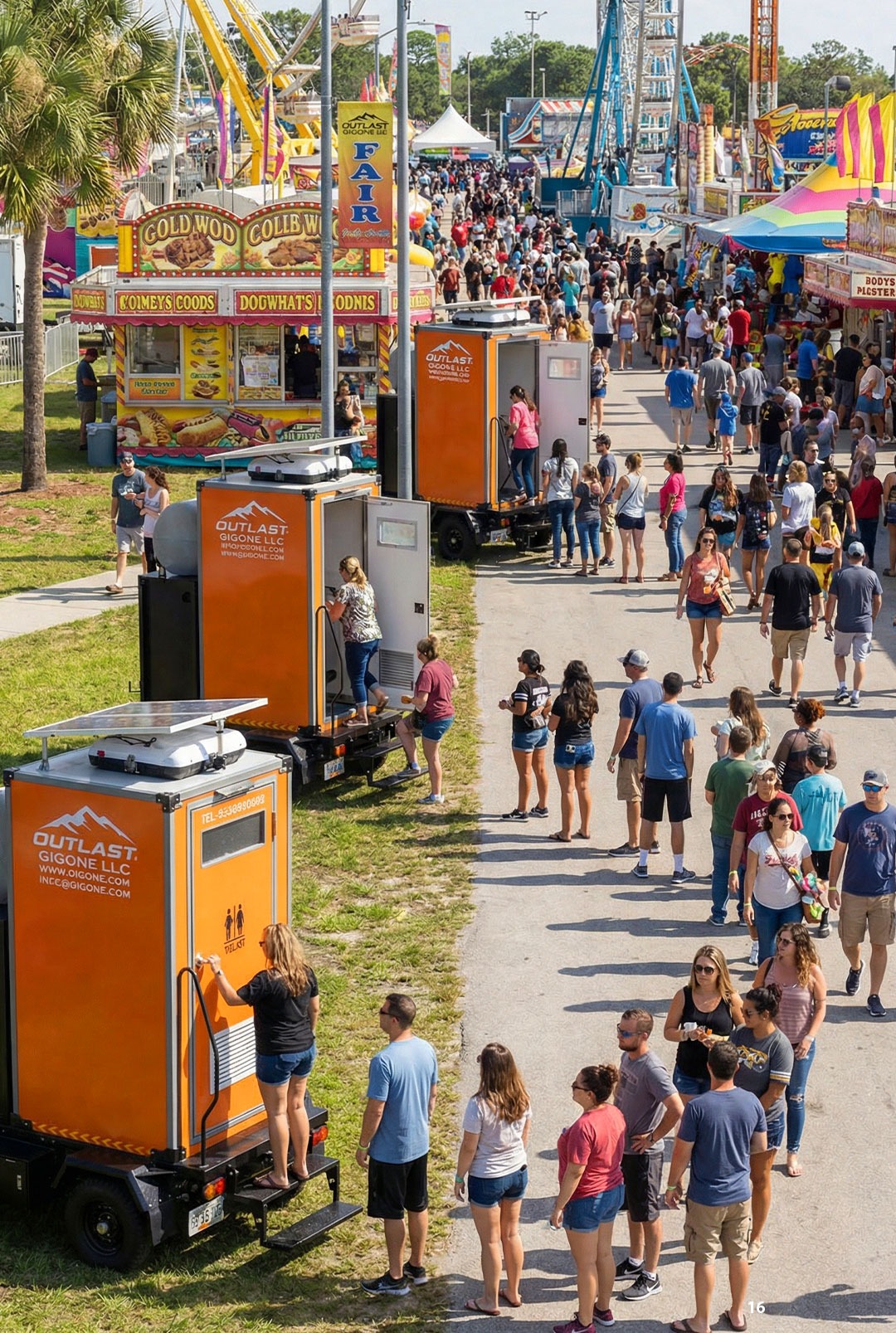
Unlike event-grade portable toilets designed for short deployments, A-1P and AA-1P are built for continuous, high-duty use. Both models are commonly deployed in:
- Public infrastructure and municipal projects
- Long-term construction and industrial sites
- Government and B2G contracts
- Remote or climate-challenged locations
- Professional rental fleets operating year-round
From the outset, the engineering goal was clear: maintain structural Integrity, stability, user safety, and system performance over decades, not seasons. This philosophy influences every layer of the system, from the load-bearing frame to insulation, weather resistance, and component selection.
2. Reinforced Steel Framework: The Backbone of Longevity
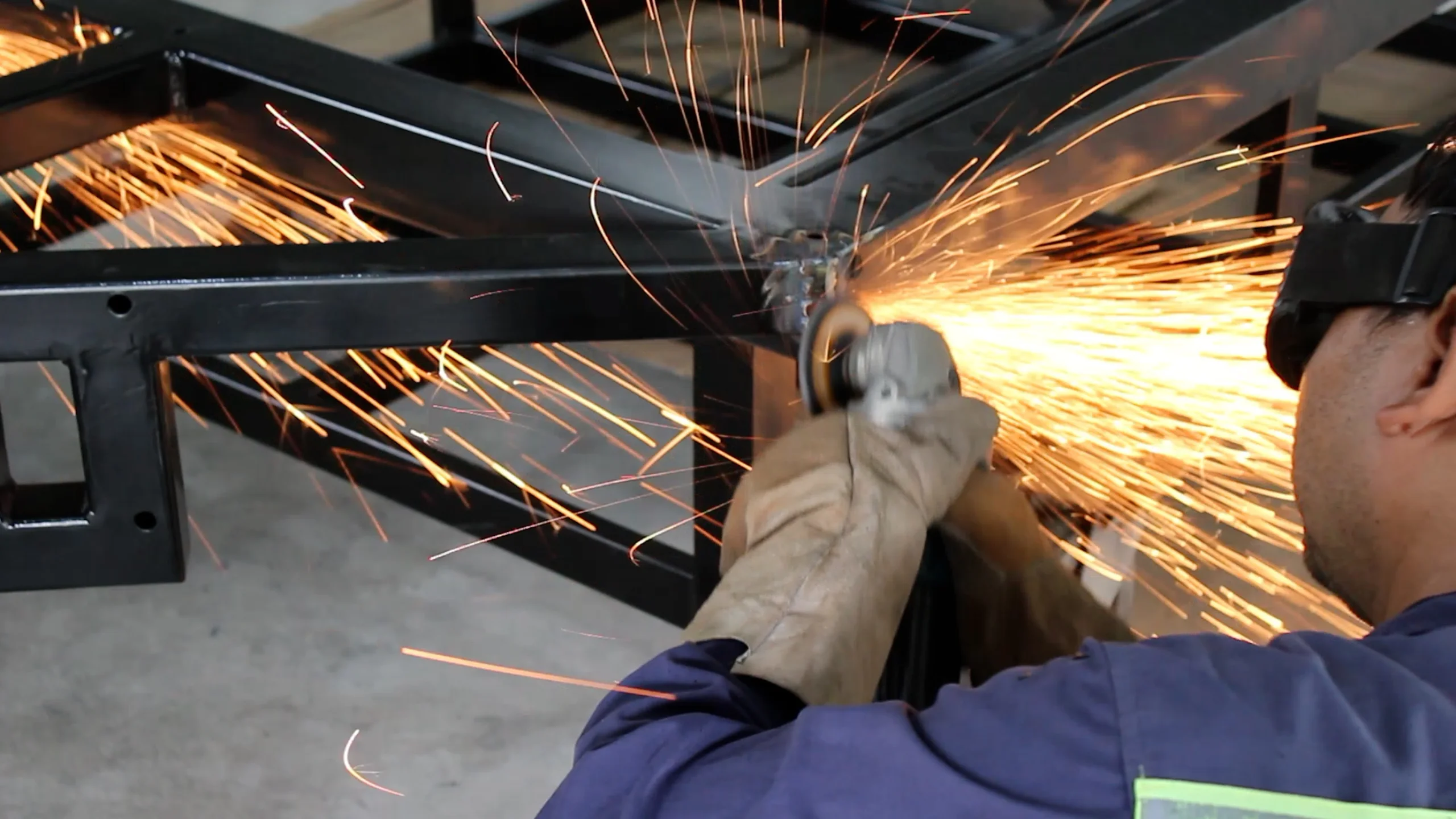
At the core of both A-1P and AA-1P lies a reinforced steel Structural Integrity framework engineered to handle:
- Repeated transportation and towing
- Uneven terrain and semi-permanent placement
- High internal equipment loads
- Continuous user traffic
Steel-based structural systems are widely recognized for their superior load-bearing capacity and fatigue resistance in infrastructure applications. According to the American Institute of Steel Construction (AISC), properly engineered steel structures can reliably exceed multi-decade service lives when exposed to harsh environments
For mobile sanitation systems, this translates directly into:
- Reduced frame deformation over time
- Improved towing stability
- Lower structural maintenance costs
Both models utilize steel reinforcement strategies aligned with industrial and public-sector design expectations, rather than consumer-grade mobile cabins.
3. Corrosion-Resistant Materials: Protecting the Structure Over Time
Environmental exposure is one of the leading causes of premature failure in portable sanitation units. Moisture, cleaning chemicals, temperature fluctuations, and airborne contaminants accelerate corrosion and material fatigue. To counter this, A-1P and AA-1P integrate corrosion-resistant materials throughout the system, including:
- Treated metal components
- Protective coatings on load-bearing elements
- Materials selected for high humidity and outdoor exposure
The National Association of Corrosion Engineers (NACE) estimates that corrosion-related degradation accounts for trillions of dollars in infrastructure losses globally each year — much of it preventable through proper material selection. By addressing corrosion at the design stage, Premium Mobile Oasis™ significantly extends usable service life while minimizing long-term repair and replacement costs.
4. Heavy-Duty, Industrial-Grade Components
Structural durability extends beyond the frame itself. Every functional component must withstand daily use without failure. Both A-1P and AA-1P utilize industrial-grade, heavy-duty components, including:
- Reinforced doors, hinges, and locking systems
- Commercial-grade flooring with anti-slip surfaces
- Electrical and HVAC systems rated for continuous operation
These components are selected based on industrial reliability standards, not consumer convenience. The result is:
- Fewer service interruptions
- Lower maintenance frequency
- Improved safety for users and operators
This approach is especially critical for government and construction deployments where downtime is not acceptable.
5. Full-Body Insulation: Stability Across Climate Extremes
A defining feature of both models is full-body thermal insulation, enabling stable operation in both hot and cold environments. Benefits include:
- Reduced heat transfer in extreme temperatures
- Lower energy demand for air conditioning and heating
- Improved user comfort without compromising efficiency
According to the U.S. Department of Energy, effective insulation can reduce HVAC energy consumption by 20–30% in enclosed systems. For long-term deployments, this translates directly into:
- Lower operating costs
- Reduced generator or power system load
- Increased system lifespan due to reduced thermal stress
6. Extreme Weather Resistance: Built for Harsh Conditions
Both A-1P and AA-1P are engineered to operate reliably across diverse and often severe weather conditions.
Key performance capabilities include:
- Wind resistance exceeding 100 mph
- Structural stability during heavy rainfall
- Reliable operation in snow, heatwaves, and storms
These performance benchmarks align with widely recognized guidelines for outdoor structures issued by organizations such as FEMA and the American Society of Civil Engineers (ASCE). This level of weather resilience allows deployment across multiple U.S. regions and climate zones without Structural Integrity compromise — a critical requirement for national rental fleets and public agencies.
7. Winter-Ready Design Without Antifreeze Chemicals
Cold-weather operation is a common failure point for portable sanitation systems. Many rely on antifreeze chemicals that introduce:
- Environmental risks
- Increased operating costs
- Regulatory complications
Both A-1P and AA-1P are fully winter-ready without the use of antifreeze chemicals, enabling:
- Safer operation in environmentally sensitive areas
- Reduced chemical handling requirements
- Compliance with sustainability guidelines
The U.S. Environmental Protection Agency (EPA) highlights antifreeze chemicals as a potential groundwater contamination risk when improperly managed. Eliminating this dependency further reinforces the long-term sustainability and compliance value of both models.

8. Government-Grade & Industrial-Grade Compliance
A-1P and AA-1P are engineered to meet government-grade and industrial-grade standards, making them suitable for:
- B2G contracts
- Municipal and state projects
- Public infrastructure deployments
- Regulated industrial environments
This includes alignment with:
- Safety requirements
- Structural Integrity performance expectations
- Long-term operational reliability standards
Public sector buyers prioritize systems that minimize lifecycle risk, not just upfront cost. The engineering profile of both models directly addresses this priority.
9. 15+ Year Design Lifespan: A Strategic Investment
With a design lifespan exceeding 15 years, Premium Mobile Oasis™ A-1P and AA-1P offer a fundamentally different value proposition compared to short-lived portable units. Long-term benefits include:
- Reduced capital replacement cycles
- Predictable depreciation schedules
- Improved ROI for rental operators
- Lower total cost of ownership (TCO)
For rental-based business models, this durability enables:
- Stable fleet planning
- Higher asset utilization
- Stronger long-term profitability
10. A-1P vs AA-1P: Shared DNA, Scaled Capability
While both models share the same durability philosophy and engineering foundation, they serve different operational scales.
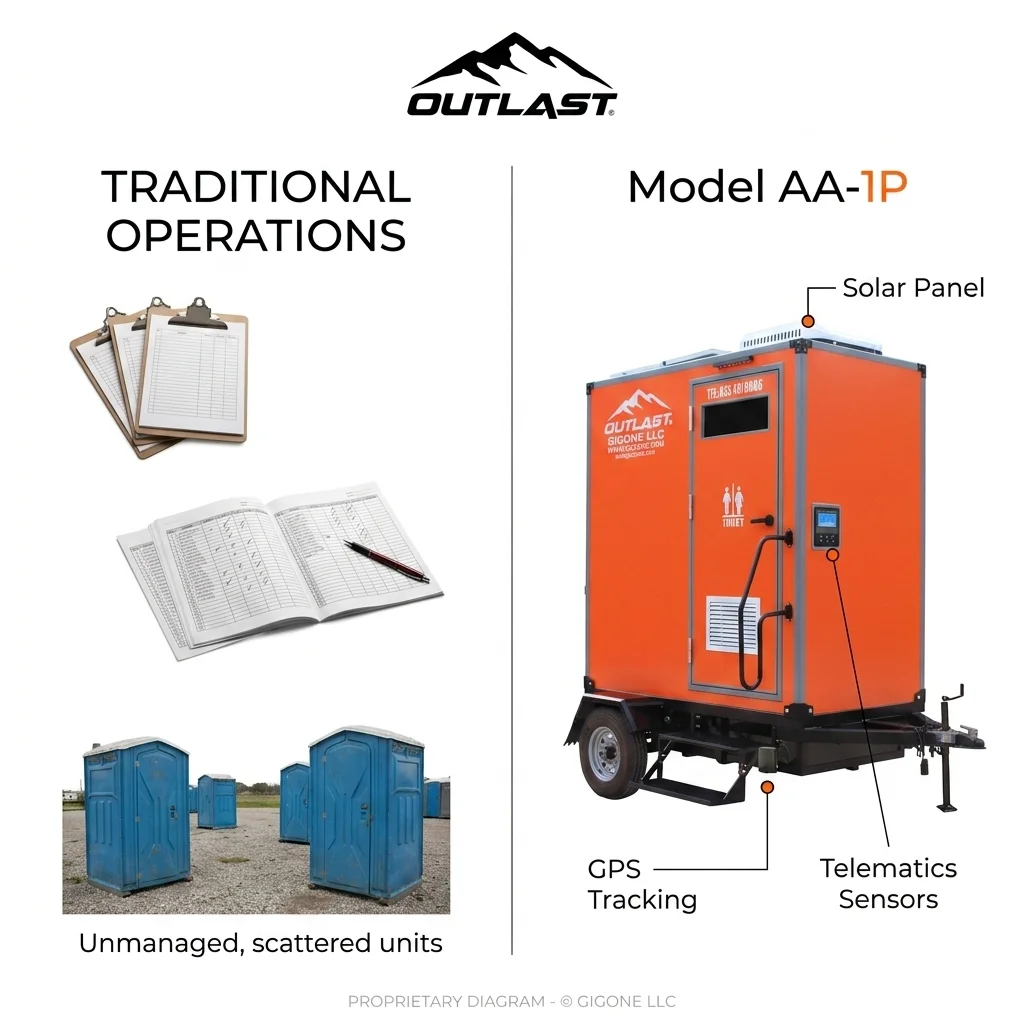
- Model A-1P: Optimized for premium deployments, controlled environments, and long-term sites requiring high reliability with efficient footprint.
- Model AA-1P: Designed for larger-scale, more demanding environments, extended deployments, and extreme operating conditions.
Both models deliver the same structural integrity, weather resistance, and lifecycle durability, allowing operators to scale fleets without compromising standards.
Built for Infrastructure, Not Convenience
In an industry often defined by short-term solutions, Premium Mobile Oasis™ Models A-1P and Premium Mobile Oasis™ Models AA-1Prepresent a shift toward infrastructure-grade mobile sanitation. Our mobile sanitation solutions support long-term and large-scale operations across Florida, Georgia, Alabama, South Carolina, and Tennessee. With reinforced steel structures, corrosion-resistant materials, full-body insulation, extreme weather resilience, and a 15+ year design lifespan, these systems are engineered for organizations that value:
- Long-term performance
- Operational stability
- Regulatory compliance
- Sustainable investment
For government agencies, contractors, and professional rental operators, durability is not optional — it is the business model. A-1P and AA-1P are built to support that reality.
Leave a Reply
You must be logged in to post a comment.