
Built for harsh realities: engineering for the extremes
Table of Contents
Outdoor equipment isn’t just exposed to the elements; it’s challenged by them. From high-speed winds and corrosive salt air to uneven terrain and constant vibration, rugged environments test every design flaw. At Gigone, we knew our products had to do more than survive. They had to outperform, outlast, and stay reliable where others failed.
While our first shipment has not yet arrived in the U.S. and we haven’t conducted official field trials, everything about Gigone’s product line, from the materials we chose to the structural reinforcements we engineered, was built to handle the worst that nature throws at it. This case study explores how we designed for durability and simulates real-world deployment scenarios where Gigone is ready to stand strong.
Engineering from the ground up

From the beginning, our design team operated under one principle: if it can’t handle abuse, it doesn’t belong outdoors.
Materials that don’t back down
- Metal components: We use aerospace-grade aluminum alloys that are lightweight, non-corrosive, and structurally robust under high stress and long-term exposure.
- Engineered plastics: Key non-metal parts are made from reinforced nylon and impact-resistant polycarbonate, selected for their stability under extreme UV, heat, and cold.
- Protective coatings: All surfaces are powder-coated with UV-resistant finishes that prevent rust, fading, and damage from acidic rain or salt-laden air.
Structural integrity by design
- The product’s architecture follows a load-dispersing layout, reducing stress points during high impact or wind exposure.
- Modular construction enables easy part replacement in the field without having to swap out the entire unit.
- Heavy-duty stainless steel fasteners and hinges are rated to withstand nearly 2,000 lbs of pressure, more than sufficient for extreme load-bearing use cases.
How Gigone gear handles the tough stuff

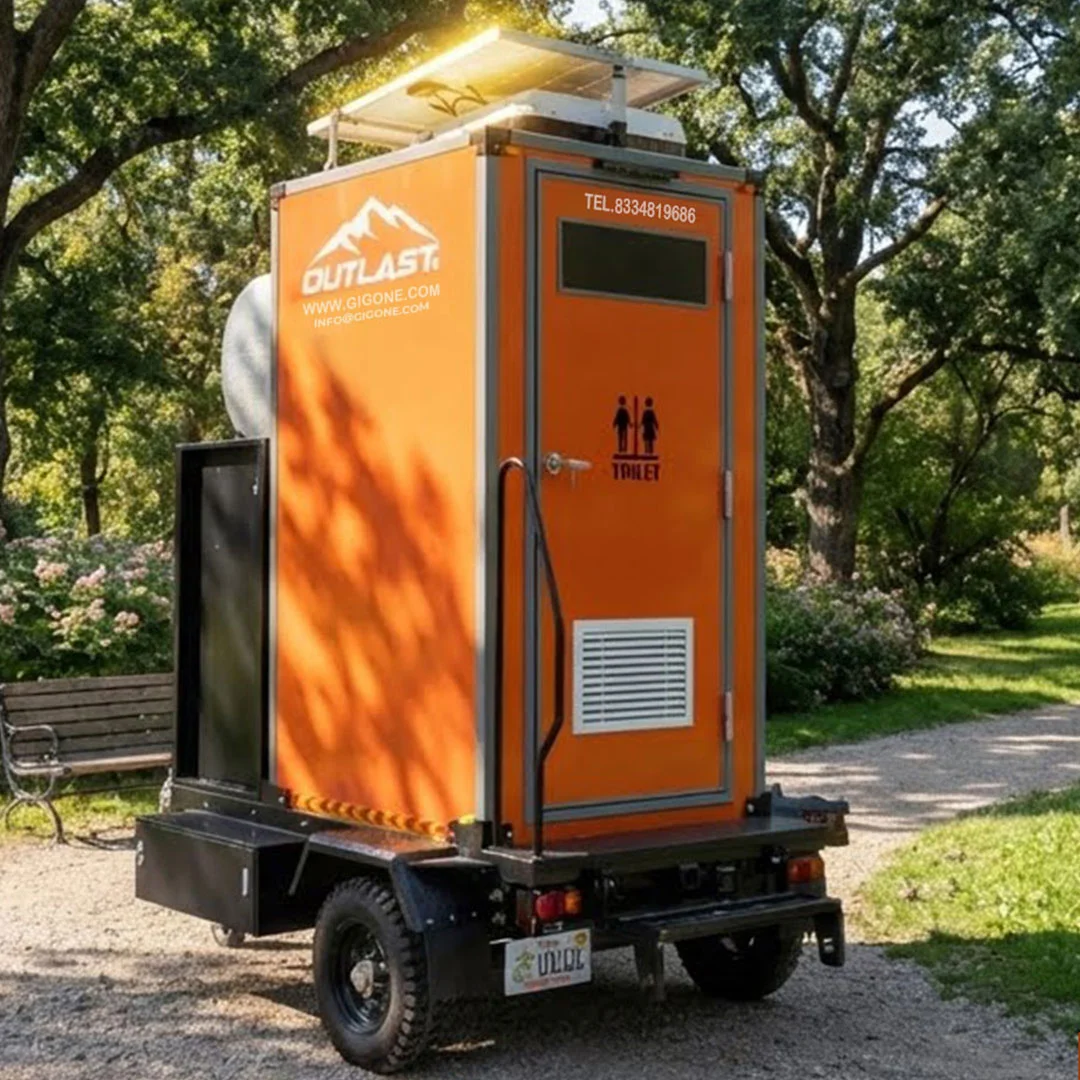
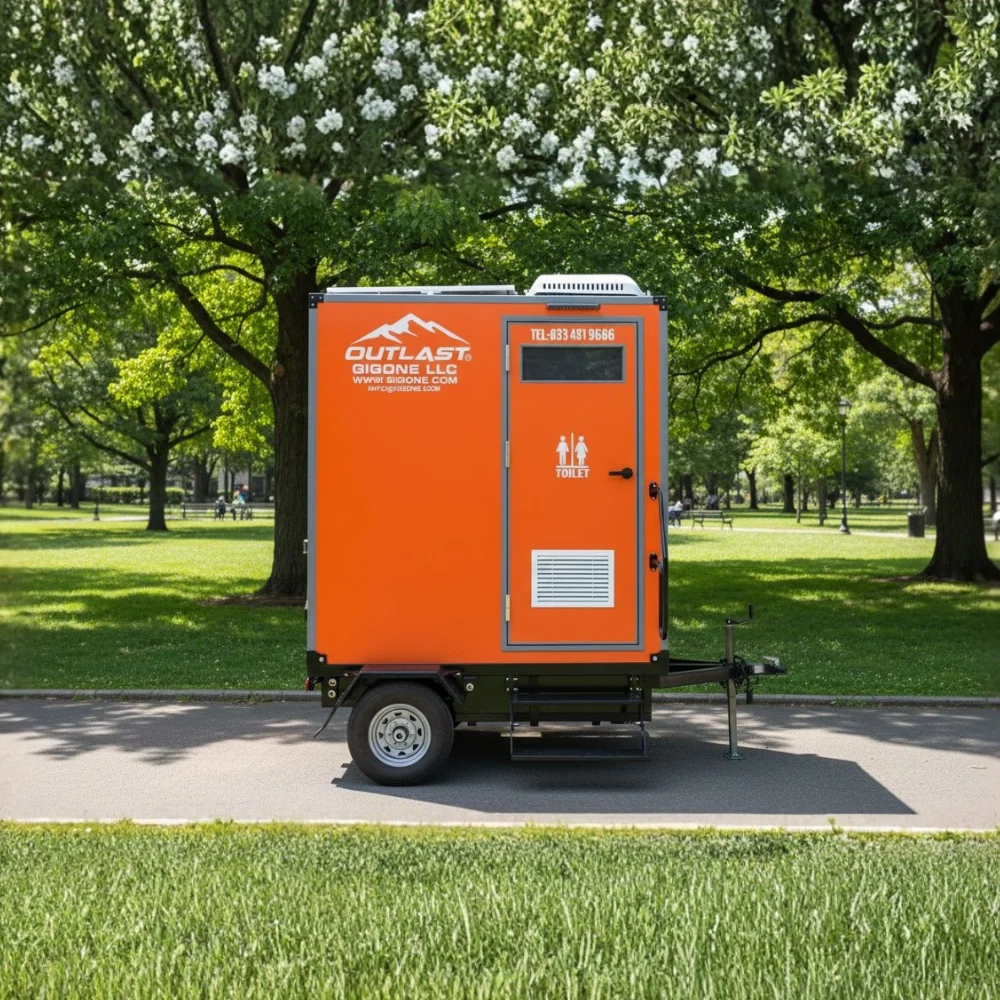
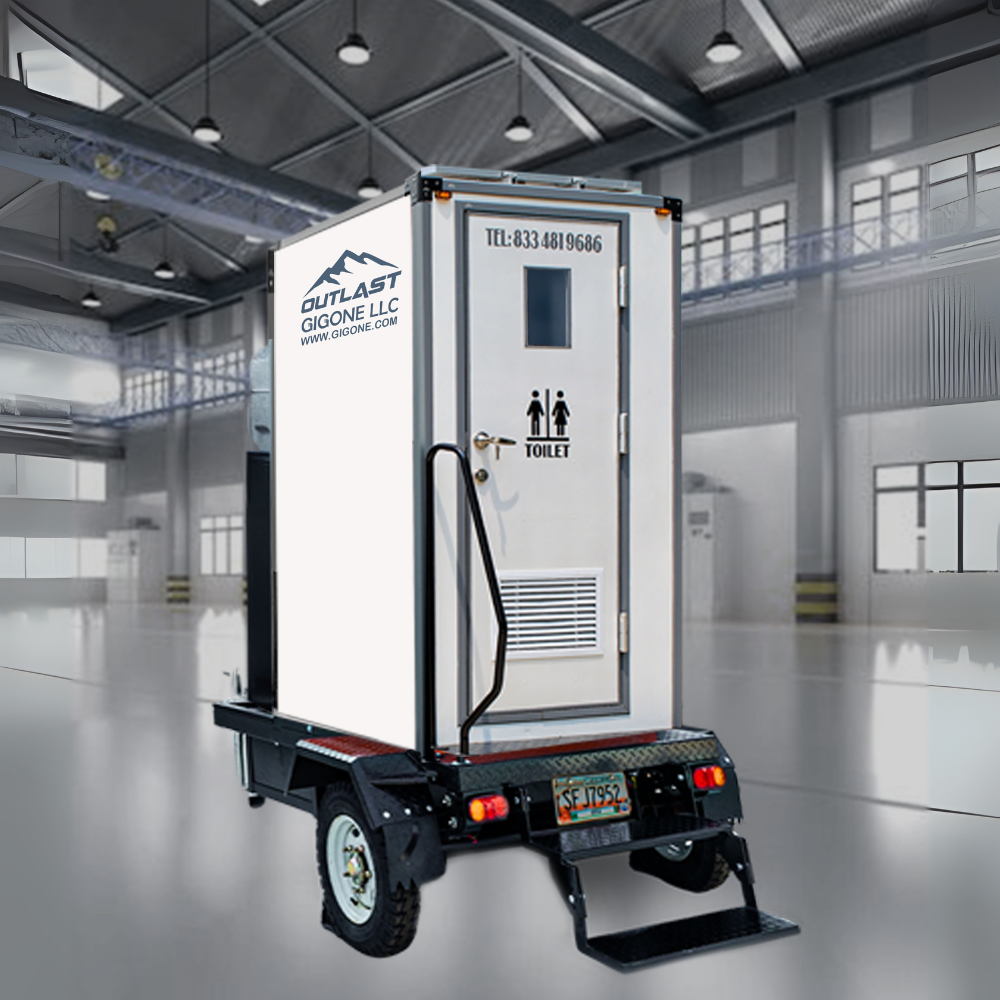
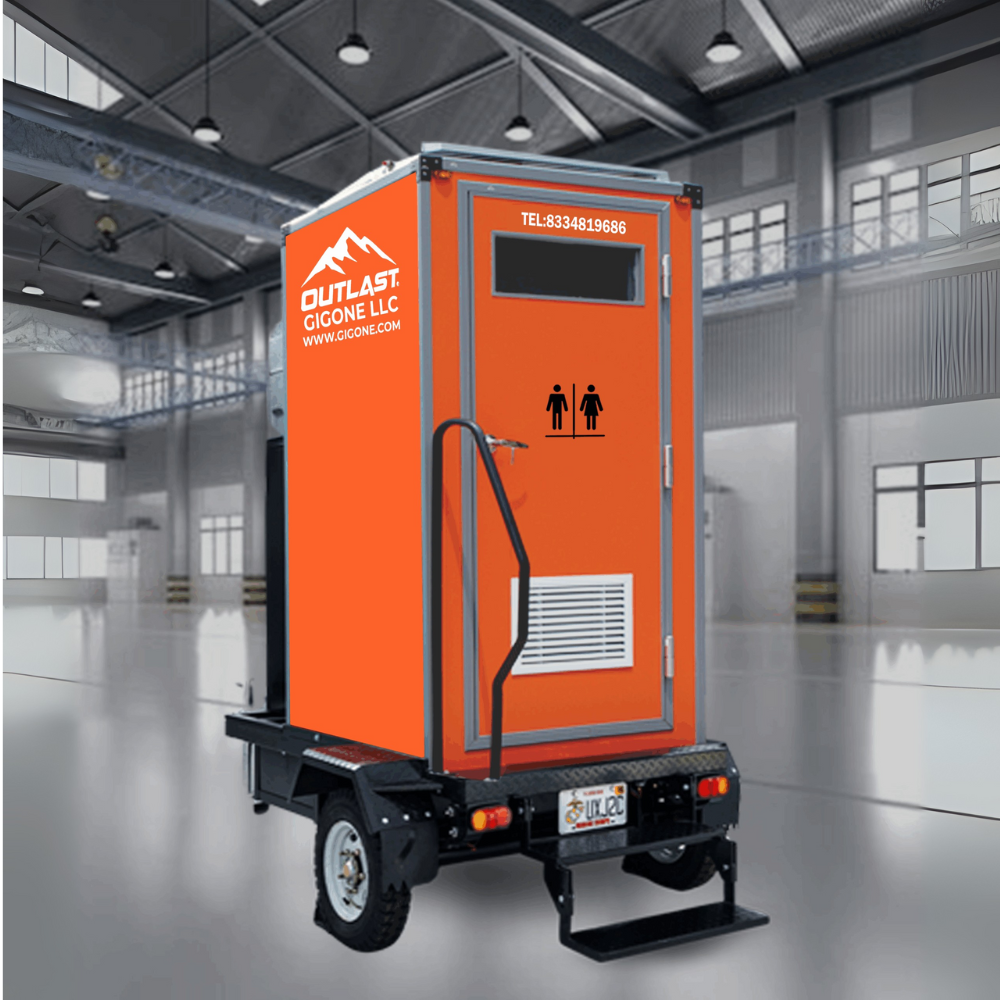
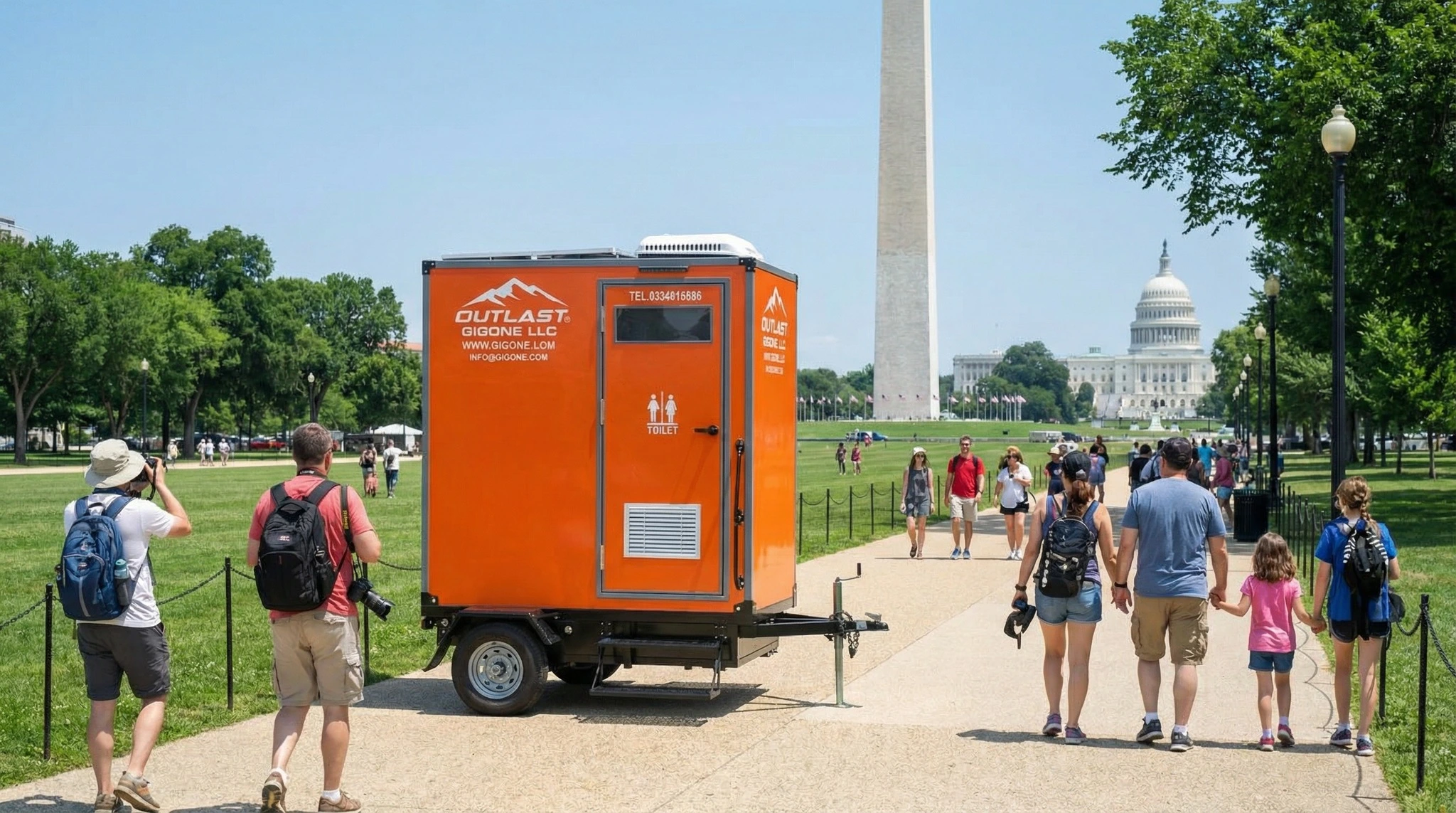
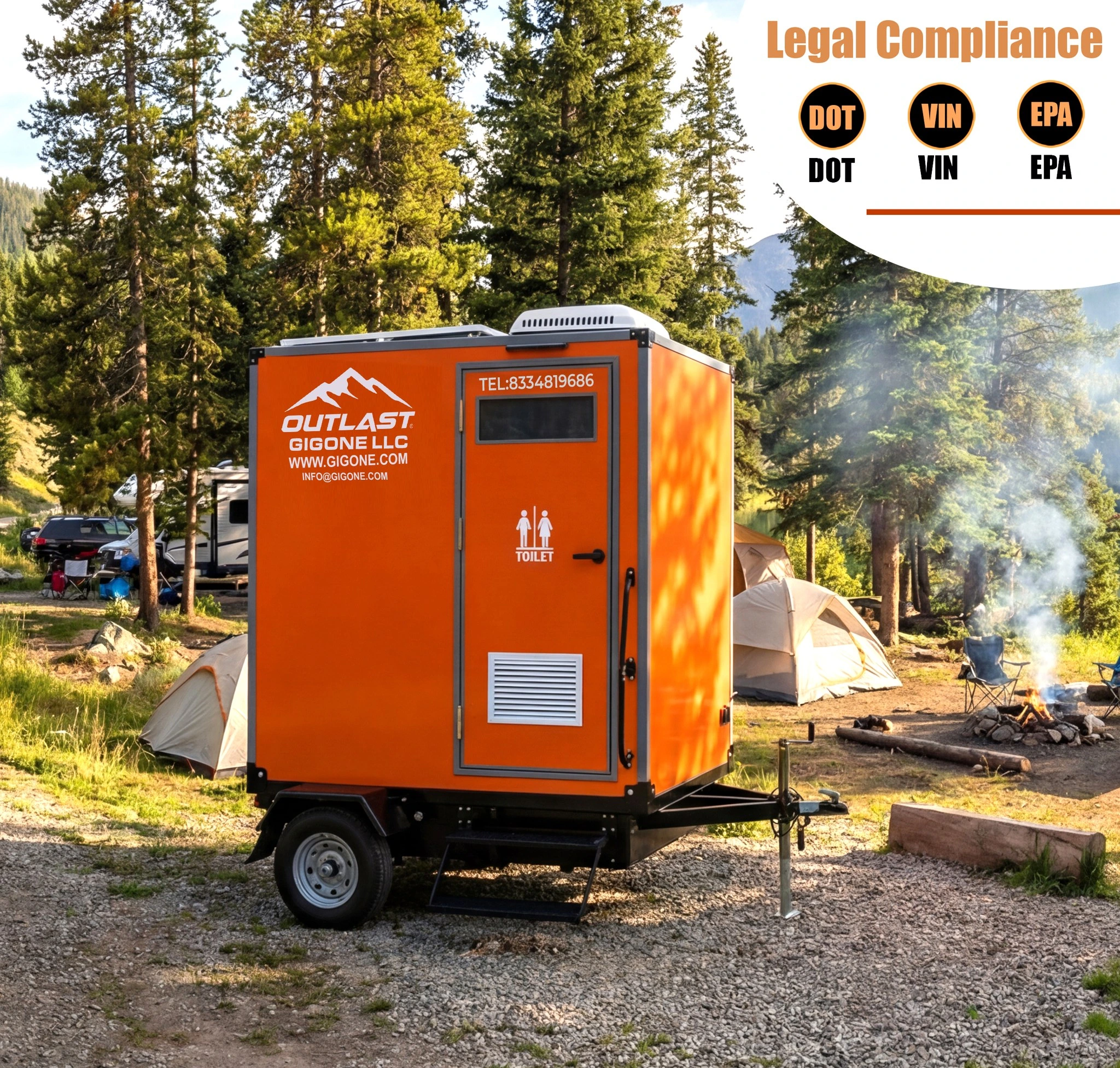
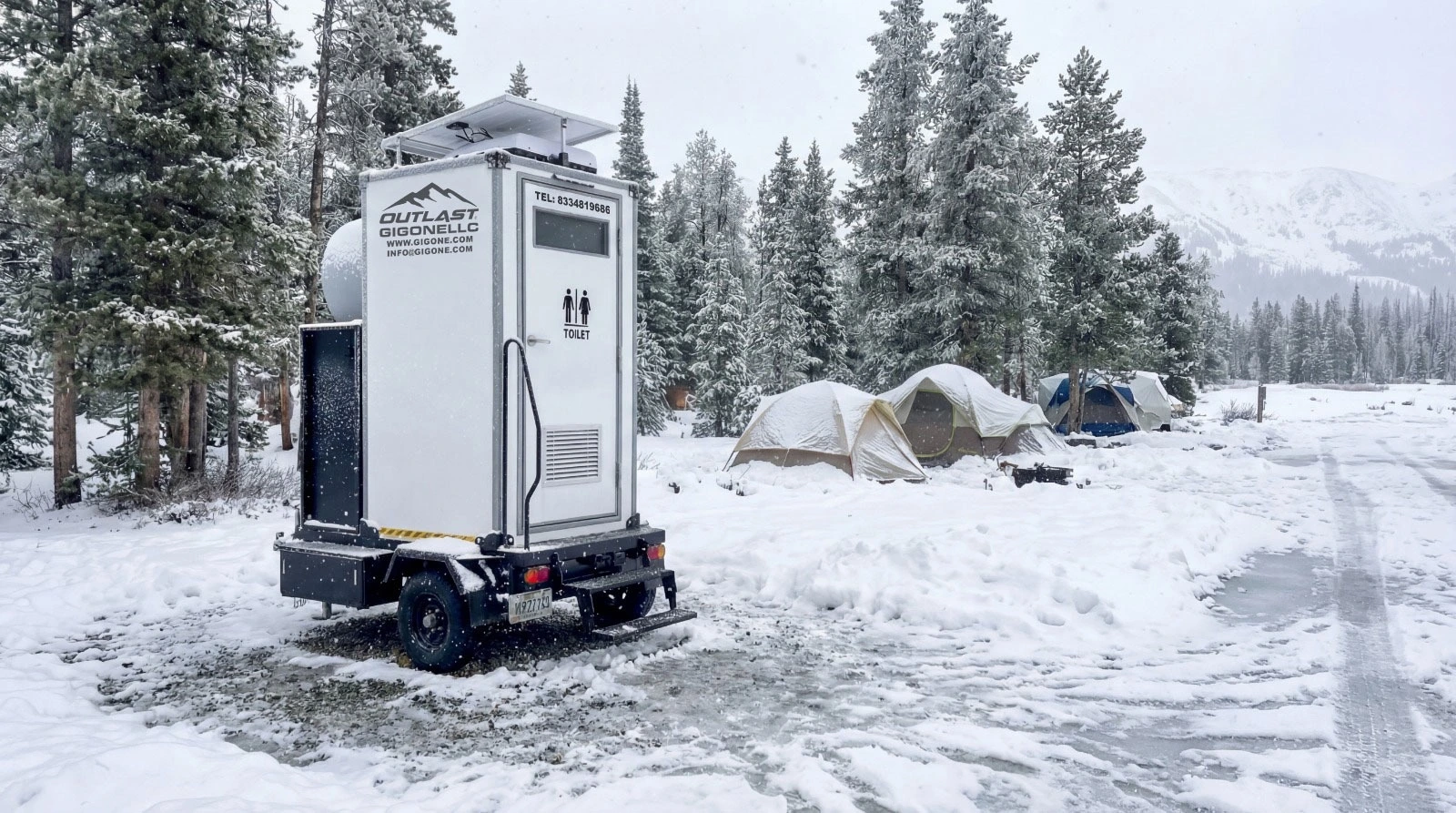
Gigone portable restrooms withstand winds up to 100mph
We haven’t hit the field yet, but that didn’t stop us from preparing for it. Using real environmental data from high-stress U.S. regions, we’ve simulated three real-world outdoor scenarios, each chosen for the unique challenges it poses. Our aim? Prove that Gigone products are overbuilt, not overhyped.
Scenario 1: Standing Tall in High Wind, The Wyoming Highlands Test
- Environmental challenge: In high plains and mountain regions like Wyoming and Colorado, wind speeds regularly reach 80–100 mph, hurricane-level gusts capable of toppling unanchored structures.
- Risks: High wind doesn’t just push; it pulls, rattles, vibrates, and stresses every joint and anchor point. Ordinary outdoor equipment gets bent, lifted, or simply fails.
- Our defense
- Gigone products are low-profile and designed with a low center of gravity to reduce lift.
- Base units include anchor points for ground bolts or weighted platforms.
- In lab simulations replicating category 2 hurricane winds, our units remained stable and fully operational for over 6 continuous hours without structural damage.
Scenario 2: Coastal Deployment, Salt Air, Humidity, and Corrosion Resistance
- Environmental challenge: Coastal areas like Florida and the Gulf Coast experience extreme humidity, salt-laden air, and rapid weather changes. These are ideal corrosion zones.
- Risks: Salt accelerates oxidation, especially on untreated metals. High humidity can deform lower-grade plastics and cause mold or material fatigue over time.
- Our defense
- All metallic components are treated with marine-grade anti-corrosion coatings.
- Plastic parts are mold-resistant and formulated to resist warping or cracking in 95%+ humidity environments.
- Full sealing gaskets made from industrial-grade EPDM block moisture intrusion, preserving internal components and preventing condensation buildup.
- Our salt spray tests (per ASTM B117) showed no surface corrosion or mechanical degradation after 96 hours of continuous exposure.
Scenario 3: Construction-Grade Toughness, Dust, Vibration, and Constant Impact
- Environmental challenge: In dry, dusty regions like Texas or inland California, construction sites combine uneven terrain, airborne debris, and frequent physical contact with equipment.
- Risks: Fine dust can infiltrate moving parts. Continuous vibration can loosen fasteners. Repeated impacts damage outer shells and stress internal structures.
- Our defense
- All seams are sealed to meet a dust-resistance rating comparable to IP5X.
- Built-in shock dampers absorb movement from heavy machinery or seismic-like ground shifts.
- Structural walls are reinforced at known impact points and have passed 1.5-meter drop tests without deformation or compromised sealing.
- The entire unit is designed to be rinsed and cleaned without risk of internal water penetration.
Confident without the field? Here’s why

The product is designed with a sturdy steel frame.
Field data is coming, and when it does, we’ll report it transparently. But even now, our confidence isn’t based on guesswork. It’s built on deliberate engineering and in-house testing that simulates the real-world conditions our products are made for.
Lab-tested for tough environments
At Gigone, every product goes through internal testing to push it to its limits before it ever ships. Our engineering team has conducted
- Load-bearing tests simulating up to 2,000 lbs of static pressure
- Vibration tests across varied frequencies to reflect transport, wind, and ground impact conditions
- Material stress testing to assess deformation, cracking, or failure under repeated strain
- Exposure simulations using heat, humidity, and prolonged outdoor-like conditions
These aren’t one-time checks; they’re built into our development cycle. Our goal is simple: if it can’t pass the lab, it doesn’t go to market.
Our design process also includes feedback from field professionals, installers, and technicians to ensure every bolt, joint, and surface makes sense in practice, not just in theory.
So while field deployment is the next step, our commitment to performance started long before that, and it’s built into every inch of the product.
Designed with feedback loops
Our approach wasn’t built in isolation. We consulted with structural engineers, outdoor product designers, and industry safety advisors to pressure-test every design decision. Their input influenced everything from joint placement to material thickness and modular component sizing.
On-the-ground testing and deployment

The product is designed to be waterproof from the outside.
The next phase is real-world proof, and it’s coming soon.
Our first deployment locations in the U.S. will be selected to represent the full range of use cases described above. We’re working with distributors, installation partners, and early adopters who are eager to validate performance in actual rugged environments.
Gigone will collect feedback across multiple dimensions
- Structural integrity over time
- Ease of installation and maintenance
- Resistance to environmental degradation
- Operational functionality under daily use
We’ll update this case study with hard data, photos, and field insights as they come in. This is part of our commitment to transparency and continuous improvement.
If you’re part of an organization operating in extreme settings and want to be part of our field testing initiative, get in touch. We’d love to collaborate.
Gigone products weren’t designed for “average conditions.” They were made for the unpredictable, the hostile, and the demanding. From wind to salt, dust to impact, our gear is engineered to survive what others can’t.
Even without field data, our confidence is grounded in rigorous design, precise engineering, and testing that simulates what’s to come. The real world is waiting, and we’re ready



Leave a Reply
You must be logged in to post a comment.